Backing option · No attachment layer
Plain Backing PVC Patches — No Attachment Layer Supplied
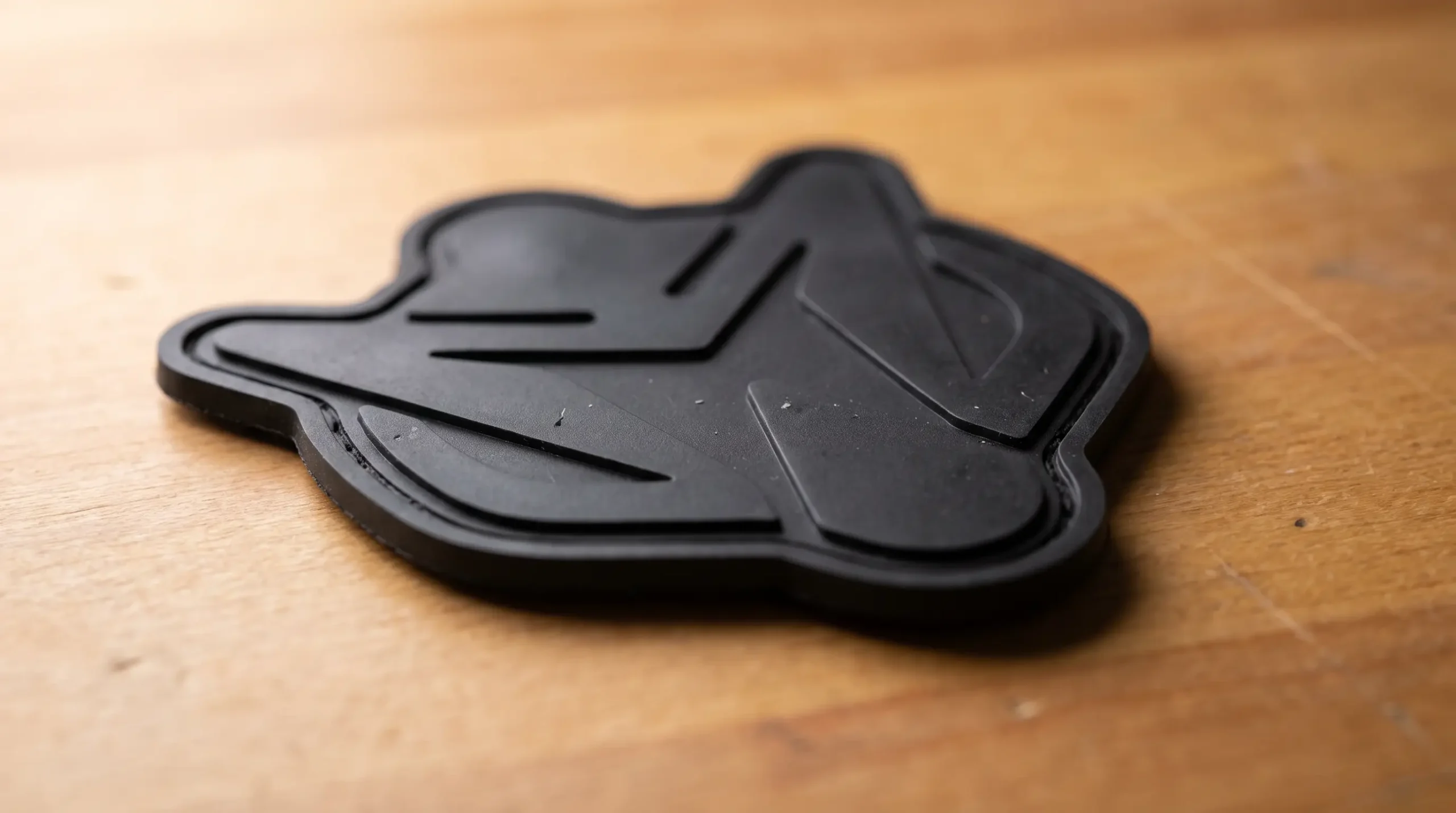
Plain backing supplies a custom PVC patch with a clean reverse and no attachment layer — no velcro, no adhesive and no stitch channel. Buyers choose plain backing to apply their own attachment, build the patch into another product, or receive the patch loose. Plain backing leaves the moulded rubber face untouched and keeps the back of the patch open for any finishing method. This page explains what plain backing is, why UK buyers order it, and how a plain-backed patch attaches.
Featured Client

Definition
What Is Plain Backing on a PVC Patch?
Plain backing is a finishing option that supplies a PVC patch with no attachment layer on the reverse. The patch arrives as bare moulded rubber, die-cut to shape, with a flat back and nothing bonded to it. Plain backing differs from every other option in one respect: each alternative adds a layer, and plain backing adds none. Hook-and-loop backing bonds a velcro field to the reverse, sew-on backing forms a stitch channel around the border, and 3M adhesive backing applies a peel-and-stick film — plain backing does none of these. The full menu of attachment methods sits on the PVC patch backing options hub. Plain backing hands the finishing decision to the buyer, which is exactly why certain orders specify it.
Three common use cases
Why Choose Plain Backing?
Plain backing suits buyers who finish, assemble or resell the patch themselves. Three use cases account for most plain-backed orders, and each one keeps the attachment choice open until the patch reaches its final use.
Applying Your Own Backing Later
Plain backing lets the buyer add an attachment method after delivery. A garment decorator bonds their own hook-and-loop tape, a tailor stitches the patch by hand, and a workshop applies self-adhesive film to the reverse. A professional decorator also heat-seals a backing film into place where the equipment allows, though the moulded PVC face is never ironed directly. Plain backing preserves every one of these routes, because the reverse arrives bare.
Moulding or Building the Patch Into a Product
Plain backing suits patches set into another product. Manufacturers stitch or mould a plain patch into bags, luggage, cases and assembled goods, where a pre-applied backing would interfere with construction. A bare reverse sits flush against the host product without a velcro panel or an adhesive film in the way. Plain backing therefore serves product builders as often as it serves apparel brands.
Loose Supply for Resale, Display and Trading
Plain backing suits patches supplied loose. Collectors, traders and merchandise brands hold plain-backed patches as stock, display pieces and giveaways before any attachment is added. A loose patch stays flexible for resale, and the end customer selects the backing later. Plain backing keeps the unit cost low, which matters most on volume held for trade.
Attachment routes
How to Attach a Plain-Backed PVC Patch
A plain-backed PVC patch accepts three attachment routes. A tailor stitches the patch around its die-cut edge, a workshop applies self-adhesive film to the reverse, and a professional decorator heat-seals a backing film into place. Each route bonds the patch to a garment or surface without altering the moulded face. Home ironing is not one of these routes, because PVC softens above 120°C — the reason is covered in why PVC patches cannot be ironed on. The method-by-method process for each attachment type sits on how to attach a PVC patch. Buyers who prefer a defined stitch channel from the outset choose sew-on backing instead of finishing a plain patch themselves.
Three routes
Four backing choices
Plain Backing vs Other Backing Options
Plain backing, hook-and-loop backing, sew-on backing and 3M adhesive backing differ in what they add to the reverse and how the patch attaches. Plain backing adds nothing to the reverse, so it costs the least and stays the most flexible of the four.
| Backing | Attachment | Removable | Best for |
|---|---|---|---|
| Plain | None supplied | — | Own finishing, moulding-in, loose supply |
| Hook-and-loop | Velcro field | Yes | Tactical gear, uniforms |
| Sew-on | Thread | No | Workwear, jackets |
| 3M adhesive | Adhesive film | Once | Helmets, cases, hard surfaces |
Plain backing wins where the buyer controls the finishing, and a factory-applied backing wins where the patch ships ready to attach. Hook-and-loop backing suits removable tactical and uniform use, sew-on backing suits permanent workwear attachment, and 3M adhesive backing suits hard surfaces such as helmets and cases. Plain backing sits behind all three as the option for buyers who add their own.
In their words
Stories About Us and Our Customers
PVC patches end up on kit that works for a living. These are the orders behind them, the brief, the mould, and what the patch had to survive.
Tactical · Hook-and-loop
“The patches arrived clean, sharp and ready to go straight onto our kit bags.”
The hook-and-loop backing made it easy for the team to swap patches between packs, jackets and plate carriers without losing the raised detail in the badge.
Sarah Mitchell · Manchester
Workwear · Sew-on
“The PVC badges made our workwear look much more professional than printed logos.”
The sew-on finish gave the uniforms a permanent patch that could handle daily wear, wet weather and repeated cleaning.
James Carter · Birmingham
Streetwear · 3D relief
“The 3D finish gave our caps the premium detail we wanted.”
The raised rubber face helped the logo stand out on the front panel while keeping the colours consistent across the run.
Amelia Thompson · London
Outdoor · Waterproof
“The patches held up well on wet kit and still looked fresh after a muddy weekend.”
Waterproof PVC was chosen for bags and jackets where stitched thread would have absorbed moisture and frayed at the edge.
Oliver Hughes · Bristol
Club · Custom shape
“Our badge shape was unusual, but the final patch followed it neatly.”
The custom die-cut outline kept the club crest recognisable while the moulded edge avoided the bulky border of an embroidered patch.
Priya Shah · Leeds
Security · Velcro
“Being able to remove and replace patches between shifts has been really useful.”
The velcro-backed PVC badges moved between jackets easily while keeping a consistent, hard-wearing appearance.
Daniel Morgan · Cardiff
Frequently asked questions
Plain Backing PVC Patches — Frequently Asked Questions
Do plain-backed PVC patches come with any attachment?
No. Plain-backed PVC patches ship with a clean reverse and no attachment layer, so the buyer applies a method or builds the patch into another product.
Can you sew a plain-backed PVC patch onto fabric?
Yes. A plain-backed PVC patch accepts stitching around its die-cut edge, though sew-on backing gives a defined stitch channel for a neater, stronger result.
Can plain-backed PVC patches be ironed on?
No. PVC softens above 120°C and a domestic iron reaches 180°C, so no PVC patch attaches by home ironing.
Is there a minimum order for plain-backed PVC patches?
No. Plain-backed PVC patches carry no minimum order quantity, so an order matches the exact quantity needed.
Does plain backing cost less than velcro or adhesive backing?
Yes. Plain backing adds no attachment material and no bonding step, so it is the lowest-cost backing option on a custom PVC patch.
Ready for your own finishing method
Order Plain-Backed PVC Patches
Plain-backed PVC patches ship as bare moulded rubber, ready for the buyer to finish, assemble or resell. No minimum order applies, so an order matches the exact quantity needed. Standard production runs 10 to 14 working days from proof approval, express production runs 5 to 7 working days, and UK mainland delivery adds 1 to 2 working days. Send your artwork for a free quote and approve a digital proof before any mould is cut.
Order summary