Backing Guide · Six Attachment Options
PVC Patch Backing Options — Velcro, Sew-On, Adhesive and More
PVC patch backing is the attachment layer bonded to the reverse of a moulded rubber patch, and it decides how the patch fixes to fabric, gear or a hard surface. Custom PVC patches offer six backing options, and the right choice depends on the surface, the permanence you need, and how often the patch moves between garments. This guide defines every backing type, compares all six in one table, and shows which option suits each use case in the UK.

Featured Client

Definition
What Is PVC Patch Backing?
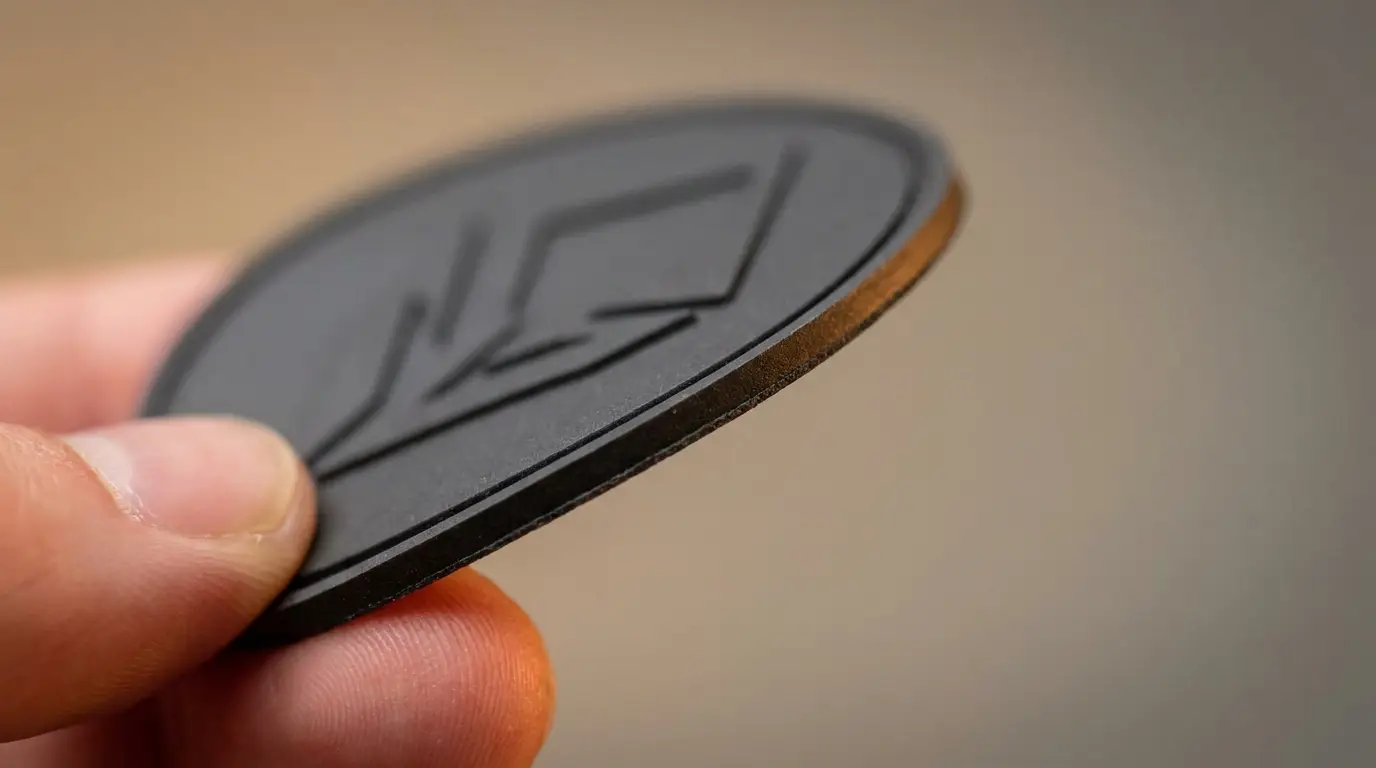
PVC patch backing is the fastening layer that a manufacturer applies to the back of a cured patch. The backing never touches the moulded face, because technicians add it after the polyvinyl chloride sets into solid rubber. This sequence matters: the front of the patch carries the design, and the reverse carries the attachment method. Backing therefore changes how a patch attaches without changing how it looks.
Every custom PVC patch reaches the customer with one of six backings. You confirm the backing type when you approve the digital proof, and the factory applies it during finishing. The six options split into two groups — removable and permanent — which the sections below set out in full.
Attachment types · Six
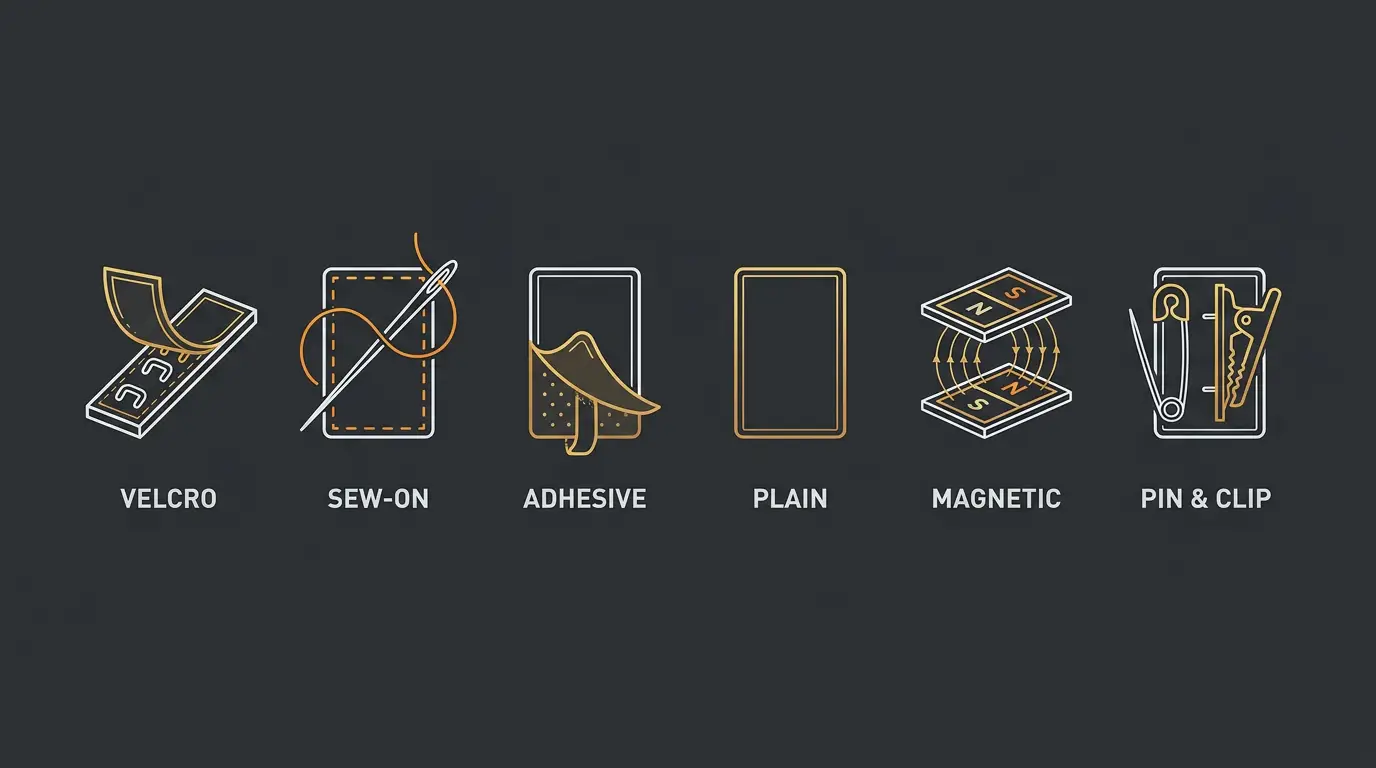
PVC Patch Backing Options Explained
Custom PVC patches divide into six backing types. Each type attaches the patch through a different mechanism, and each mechanism suits a different surface and level of permanence.

Hook-and-Loop (Velcro) Backing
Hook-and-loop backing bonds a hook panel to the reverse of the patch. The hook panel grips a loop field sewn onto the garment, which makes the patch removable and repositionable. Wearers swap velcro PVC patches between plate carriers, jackets and packs without tools or stitching. Tactical units, airsoft players and security teams specify hook-and-loop backing more often than any other option, because operational roles change and the patch must move with them. Removability defines this backing; permanence defines the next.
Sew-On Backing
Sew-on backing adds a stitch channel or a row of pre-punched holes around the border of the patch. A tailor fixes the patch by machine or by hand, and the stitched bond survives industrial laundering. Sew-on PVC patches produce the strongest attachment of the six types, so sew-on backing remains the standard for workwear, cadet uniforms and club colours. A sewn patch stays put for the working life of the garment.
3M Adhesive Backing
3M adhesive backing applies a peel-and-stick film to the reverse of the patch. The film bonds to smooth, rigid surfaces such as helmets, tool cases, laptop shells and vehicle panels. Adhesive-backed PVC patches suit hard surfaces rather than fabric, because textile fibres reduce the contact area and weaken the bond over time. Choose adhesive backing where the surface is flat and solid.
Plain Backing (No Backing)
Plain backing supplies the patch with no attachment layer at all. Manufacturers and merchandise brands choose plain-backed PVC patches when the patch is heat-pressed into another product, moulded into a larger item, or supplied loose for collectors and trading. Plain backing is the lowest-cost option, because the factory skips the finishing step.
Magnetic Backing
Magnetic backing seats a magnet behind the patch and pairs it with a second magnet behind the fabric. The two magnets hold the patch in place without piercing the garment, so the fabric stays intact. Magnetic PVC patches suit suits, aprons, corporate name badges and event wear, where a hole would damage the garment. Magnetic backing performs best on thin fabric with a light patch; a heavy patch or thick fabric reduces the hold.
Pin-and-Clip Backing
Pin-and-clip backing fits a bar pin or a clip to the reverse of the patch. The bar pin fastens the patch through fabric, and the clip attaches it to a pocket, lanyard or bag without adhesive or stitching. Pin-and-clip PVC patches keep the patch removable and hole-free on outerwear, so pin-and-clip backing suits events, exhibitions and collectors who display rather than fix their patches.
Side-by-side comparison
PVC Patch Backing Options Compared
The table below compares all six PVC patch backing options across attachment, removability and best surface.
| Backing | Attachment | Removable | Best surface | Typical use |
|---|---|---|---|---|
| Hook-and-loop (Velcro) | Hook panel to loop field | Yes | Tactical gear, uniforms | Military, airsoft, security |
| Sew-on | Thread | No | Workwear, jackets | Uniforms, club colours |
| 3M adhesive | Adhesive film | Once | Helmets, cases, hard surfaces | Kit, hardware, promo |
| Plain | None supplied | — | Custom applications | Heat-press, collectors |
| Magnetic | Paired magnets | Yes | Thin fabric, no-pierce | Suits, aprons, name badges |
| Pin-and-clip | Bar pin or clip | Yes | Fabric, no-hole | Events, lanyards, display |
Hook-and-loop and pin-and-clip backings keep the patch removable, sew-on backing fixes it permanently, and adhesive backing bonds once to a hard surface. Magnetic backing sits between the two extremes, because it holds firmly yet lifts away without a mark.
Decision guide
How to Choose the Right Backing for Your PVC Patch
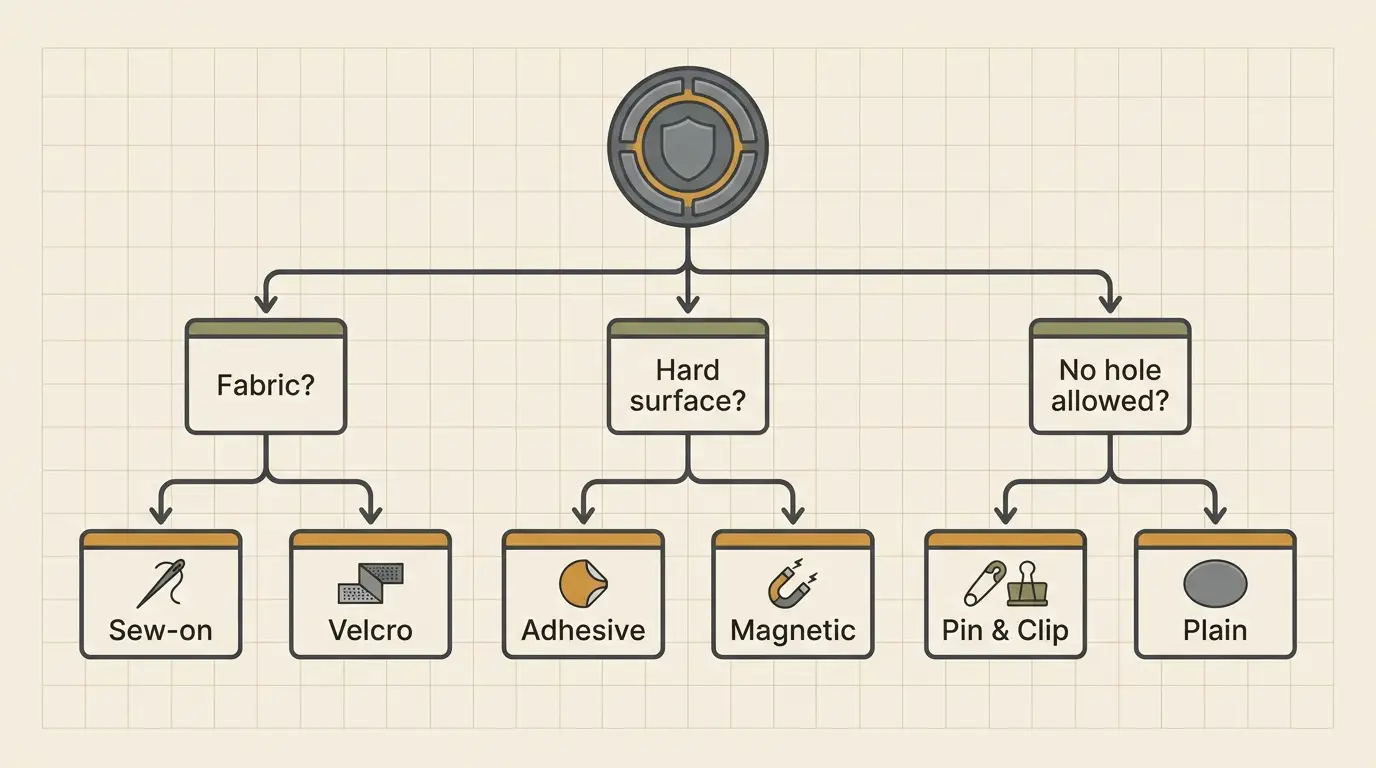
Backing choice follows two questions: what surface the patch attaches to, and whether the bond needs to be permanent. Answer those two questions and the shortlist narrows to one or two backings.
Backing by Surface
Fabric that needs a permanent patch takes sew-on backing. A hard, smooth surface takes 3M adhesive backing. Fabric that must stay unpierced takes magnetic or pin-and-clip backing. Gear that needs the patch to move between garments takes hook-and-loop backing. Match the backing to the surface first, then check permanence to confirm the choice.
Backing by Use Case
- Tactical and airsoft gear → hook-and-loop backing, for fast swaps on plate carriers and packs.
- Workwear and uniforms → sew-on backing, for a laundry-proof, permanent bond.
- Helmets, cases and hardware → 3M adhesive backing, for smooth, rigid surfaces.
- Suits, aprons and name badges → magnetic backing, for a hole-free hold on thin fabric.
- Events, lanyards and collectors → pin-and-clip backing, for removable, temporary display.
- Heat-press production and loose stock → plain backing, for onward assembly.
You can read the full method for fixing each backing in the guide on how to attach a PVC patch.
Heat limit
Why PVC Patches Cannot Be Ironed On
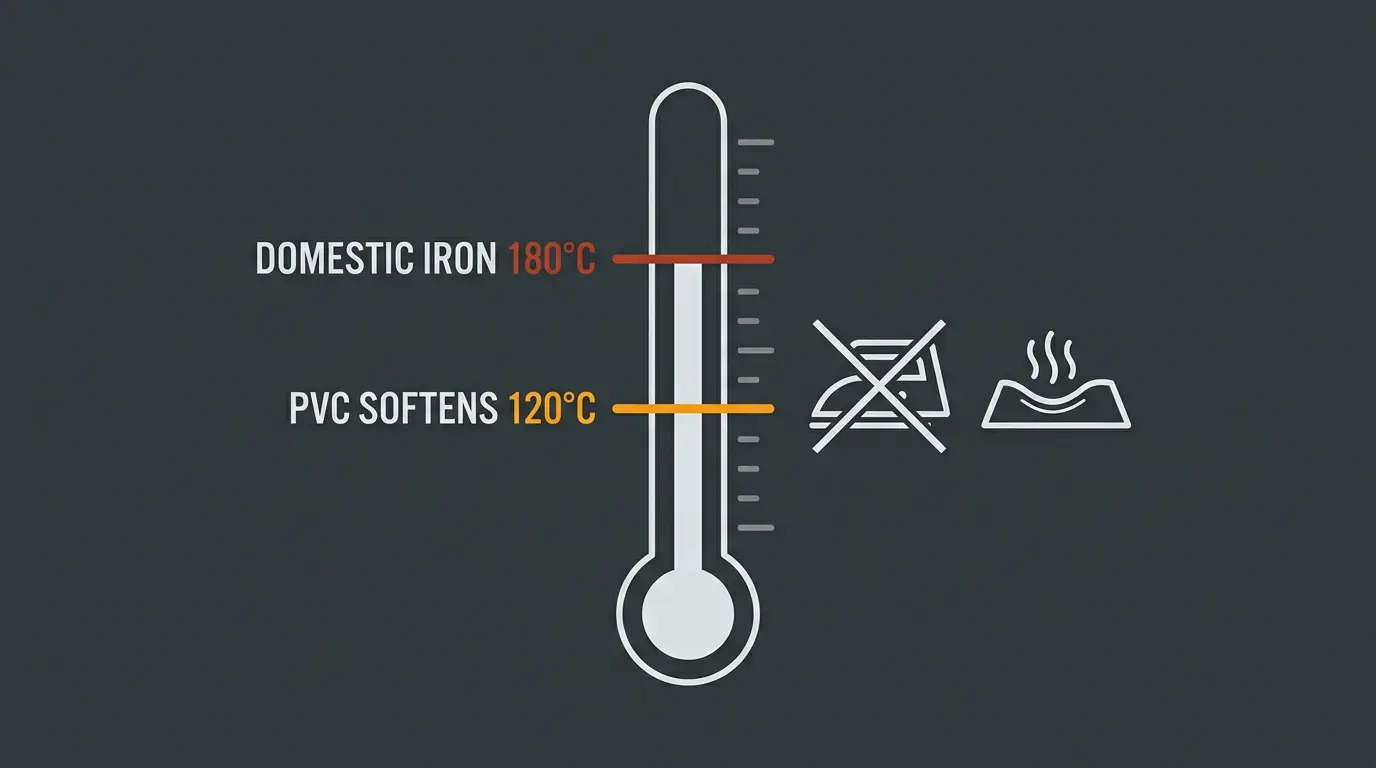
PVC patches are not available with iron-on backing. Polyvinyl chloride softens above 120°C, and a domestic iron reaches 180°C on a cotton setting. Heat at that level deforms the moulded relief and destroys the design, so no manufacturer offers iron-on backing on a rubber patch. Customers who need a permanent bond on fabric select sew-on backing instead. Heat tolerance is the single attribute where embroidered patches hold an advantage, and the guide on why PVC patches cannot be ironed on explains the temperature limit in full; in every other durability measure, PVC leads.
Ordering
How PVC Patch Backing Is Chosen and Ordered
You choose the backing during the design stage, and the factory applies it during finishing. Backing selection does not change the moulded face, so the design you approve on the proof is the design you receive. The order runs in five steps: send artwork, receive a quotation, approve the digital proof, production, then delivery.
Custom PVC patches carry no minimum order, so you order the exact quantity you need in any backing type. Standard production takes 10 to 14 working days from proof approval, and express production takes 5 to 7 working days from proof approval. UK mainland delivery adds 1 to 2 working days, and BFPO addresses are accepted for serving personnel.

Send artwork
Receive a quotation
Approve the digital proof
Production, then delivery
In their words
Stories About Us and Our Customers
PVC patches end up on kit that works for a living. These are the orders behind them, the brief, the mould, and what the patch had to survive.
Tactical · Hook-and-loop
“The patches arrived clean, sharp and ready to go straight onto our kit bags.”
The hook-and-loop backing made it easy for the team to swap patches between packs, jackets and plate carriers without losing the raised detail in the badge.
Sarah Mitchell · Manchester
Workwear · Sew-on
“The PVC badges made our workwear look much more professional than printed logos.”
The sew-on finish gave the uniforms a permanent patch that could handle daily wear, wet weather and repeated cleaning.
James Carter · Birmingham
Streetwear · 3D relief
“The 3D finish gave our caps the premium detail we wanted.”
The raised rubber face helped the logo stand out on the front panel while keeping the colours consistent across the run.
Amelia Thompson · London
Outdoor · Waterproof
“The patches held up well on wet kit and still looked fresh after a muddy weekend.”
Waterproof PVC was chosen for bags and jackets where stitched thread would have absorbed moisture and frayed at the edge.
Oliver Hughes · Bristol
Club · Custom shape
“Our badge shape was unusual, but the final patch followed it neatly.”
The custom die-cut outline kept the club crest recognisable while the moulded edge avoided the bulky border of an embroidered patch.
Priya Shah · Leeds
Security · Velcro
“Being able to remove and replace patches between shifts has been really useful.”
Hook-and-loop backing was selected for staff jackets so roles and identifiers could be changed quickly without replacing garments.
Daniel Evans · Cardiff
Merchandise · Colour match
“The colours matched our brand better than the woven sample we tried before.”
Pantone-matched PVC helped keep the logo consistent for merchandise, reorder stock and event giveaways.
Hannah Wilson · Nottingham
Motorcycle · Jacket patch
“The rubber patch gave the jacket a cleaner, tougher finish.”
The club needed a weather-resistant badge that could handle rain, road grime and regular outdoor use.
Mark Robinson · Newcastle
Sports · Team kit
“The patch worked well on kit bags and training jackets.”
A flexible PVC build kept the team crest visible without adding a heavy stitched border to lightweight gear.
Rebecca Green · Sheffield
Repeat order · Reorder
“Reordering was simple because the mould was already set up.”
The second run kept the same dimensions, relief and colour references as the original patch order.
Thomas Baker · Glasgow
Tactical · Hook-and-loop
“The patches arrived clean, sharp and ready to go straight onto our kit bags.”
The hook-and-loop backing made it easy for the team to swap patches between packs, jackets and plate carriers without losing the raised detail in the badge.
Sarah Mitchell · Manchester
Workwear · Sew-on
“The PVC badges made our workwear look much more professional than printed logos.”
The sew-on finish gave the uniforms a permanent patch that could handle daily wear, wet weather and repeated cleaning.
James Carter · Birmingham
Streetwear · 3D relief
“The 3D finish gave our caps the premium detail we wanted.”
The raised rubber face helped the logo stand out on the front panel while keeping the colours consistent across the run.
Amelia Thompson · London
Outdoor · Waterproof
“The patches held up well on wet kit and still looked fresh after a muddy weekend.”
Waterproof PVC was chosen for bags and jackets where stitched thread would have absorbed moisture and frayed at the edge.
Oliver Hughes · Bristol
Club · Custom shape
“Our badge shape was unusual, but the final patch followed it neatly.”
The custom die-cut outline kept the club crest recognisable while the moulded edge avoided the bulky border of an embroidered patch.
Priya Shah · Leeds
Security · Velcro
“Being able to remove and replace patches between shifts has been really useful.”
Hook-and-loop backing was selected for staff jackets so roles and identifiers could be changed quickly without replacing garments.
Daniel Evans · Cardiff
Merchandise · Colour match
“The colours matched our brand better than the woven sample we tried before.”
Pantone-matched PVC helped keep the logo consistent for merchandise, reorder stock and event giveaways.
Hannah Wilson · Nottingham
Motorcycle · Jacket patch
“The rubber patch gave the jacket a cleaner, tougher finish.”
The club needed a weather-resistant badge that could handle rain, road grime and regular outdoor use.
Mark Robinson · Newcastle
Sports · Team kit
“The patch worked well on kit bags and training jackets.”
A flexible PVC build kept the team crest visible without adding a heavy stitched border to lightweight gear.
Rebecca Green · Sheffield
Repeat order · Reorder
“Reordering was simple because the mould was already set up.”
The second run kept the same dimensions, relief and colour references as the original patch order.
Thomas Baker · Glasgow
Answers
Frequently Asked Questions
What backing options are available for PVC patches?
Six backing options are available: hook-and-loop (Velcro), sew-on, 3M adhesive, plain, magnetic and pin-and-clip. Each option attaches the patch through a different mechanism and suits a different surface or use case.
Can PVC patches be ironed on?
NO
No. PVC patches cannot be ironed on, because polyvinyl chloride softens above 120°C and a domestic iron reaches 180°C, which deforms the moulded relief. Choose sew-on backing for a permanent bond on fabric.
Which PVC patch backing is best for tactical gear?
Hook-and-loop (Velcro) backing is best for tactical gear, because it lets wearers swap patches between plate carriers, jackets and packs without tools.
Are Velcro PVC patches removable?
YES
Yes. Hook-and-loop backing makes a PVC patch removable and repositionable across any garment fitted with a loop field.
Can PVC patches have adhesive backing on fabric?
NO
No. 3M adhesive backing bonds to smooth, rigid surfaces such as helmets and cases; on fabric the bond weakens, because textile fibres reduce the contact area. Choose sew-on or magnetic backing for fabric instead.
Does the backing type add to the cost?
YES
Yes, slightly. Hook-and-loop and adhesive backings add a small cost over plain backing, and plain backing is the lowest-cost option because it skips the finishing step.
Is there a minimum order for custom PVC patches?
NO
No. Custom PVC patches carry no minimum order, so you order any backing type in the exact quantity you need.
Choose your attachment
Choosing Your PVC Patch Backing
PVC patch backing decides how a moulded rubber patch attaches, and six options cover every surface from a plate carrier to a laptop lid. Removable backings — velcro, magnetic and pin-and-clip — suit gear and garments that change; permanent backings — sew-on and adhesive — suit fixed uniforms and hard surfaces; plain backing suits onward production and loose stock. Match the backing to your surface and the permanence you need, and one option stands out.
Send your artwork for a quotation and receive a digital proof before any tooling begins. Get a free quote on custom PVC patches in any backing type, with no minimum order and tracked UK and BFPO delivery.
