
Material Guide · Plasticised Polyvinyl Chloride
What PVC Patch Material Is Made From
PVC patch material is plasticised polyvinyl chloride, a thermoplastic polymer that is moulded into flexible rubber patches. Manufacturers make PVC patches from four ingredients: PVC resin, plasticisers, heat stabilisers and pigments. This composition gives every custom PVC patch its waterproof body, colour-fast surface and flexible feel, which is why UK military units, workwear brands and outdoor clubs choose moulded rubber over stitched thread.
Featured Client

Definition
What Is PVC Patch Material?
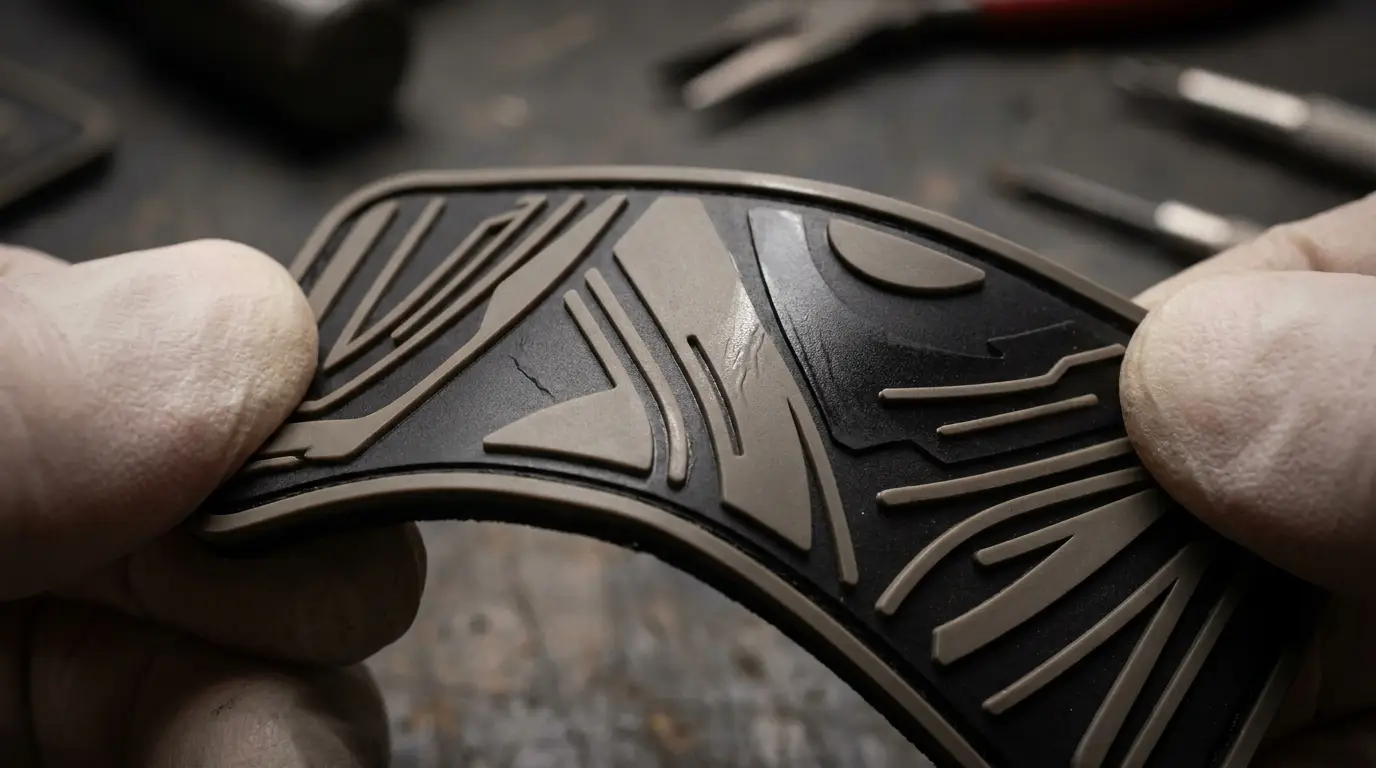
PVC patch material is polyvinyl chloride in its soft, plasticised form. Polyvinyl chloride is a thermoplastic polymer, which means the material softens when heated and sets solid when cooled. A PVC patch is not woven, printed or stitched. Instead, the patch is moulded from a liquid compound inside an engraved metal die, and the design forms as raised relief across the surface.
Suppliers list this same material under several names. The trade calls it a PVC patch, a rubber patch, a soft rubber patch or a moulded morale patch. The name changes, but the material stays constant: plasticised polyvinyl chloride. Understanding the raw material explains every attribute a buyer cares about, starting with the ingredients that go into the compound.
Four core ingredients
What PVC Patches Are Made From — The Four Core Ingredients
PVC patches are made from four ingredients blended before moulding. Each ingredient performs a specific job, and each one changes how the finished patch behaves. Manufacturers combine PVC resin with plasticisers, heat stabilisers and pigments, then pour the mixed compound into the mould.
PVC Resin — the Base Polymer
PVC resin is the base of the patch. Resin is polyvinyl chloride in powder form, and it forms the solid body of the finished emblem. The resin gives the patch its structure, its weight and its waterproof character. Because solid polyvinyl chloride absorbs no water, the resin makes the patch waterproof at the material stage, before any backing is added.
Plasticisers — What Makes the Patch Flexible
Plasticisers make the patch flexible. On its own, PVC resin sets hard and brittle. Plasticisers sit between the polymer chains and let them slide, so the finished patch bends with a garment and returns to shape without cracking. Modern patches use phthalate-free plasticisers, which meet UK and EU chemical safety standards. Flexibility is the property that separates a soft PVC patch from rigid hard PVC, a distinction the next ingredient does not affect.
Heat Stabilisers — Colour and Shape Retention
Heat stabilisers protect the patch during moulding and in daily use. The compound reaches high temperature inside the mould, and stabilisers stop the polymer degrading under that heat. Stabilisers also guard the patch against sunlight, which means the colour holds and the shape stays fixed through years of outdoor wear. UV stability is the reason a PVC patch resists fading where a printed transfer does not.
Pigments — Full-Depth Pantone Colour
Pigments give the patch its colour. Manufacturers mix pigment into the liquid compound before moulding, so the colour runs through the full depth of the material rather than sitting on the surface. Full-depth pigment is unique to PVC construction, and it explains why a PVC patch does not fade, peel or crack the way a printed patch does. Because the colour is Pantone-matched at the compound stage, brand colours reproduce accurately on every reorder. The detail behind this method is set out in the guide to Pantone colour matching for PVC patches, which explains how a PMS reference holds across a production run.
Material classification
Is PVC Patch Material Rubber or Plastic?
PVC patch material is technically a plastic, not a rubber. Polyvinyl chloride belongs to the thermoplastic family, which places it in the plastics group by chemistry. The finished patch feels and flexes like rubber, however, so the industry adopted "rubber patch" as a common trade name. Both terms describe the same product: a soft, moulded polyvinyl chloride emblem.
The confusion is useful to resolve, because material class affects performance. A thermoplastic can be melted and remoulded, which is why one mould serves every reorder of a design. Silicone, by contrast, is a separate polymer with a different chemistry, so a PVC patch is not the same as a silicone patch even though both are soft and mouldable.
Material grade
Soft PVC vs Hard PVC in Patches
PVC patches use soft PVC, the plasticised grade of the material. Soft PVC bends, folds and conforms to fabric, which suits a patch worn on a jacket, cap or pack. Hard PVC is the rigid, unplasticised grade used for pipes and window frames, and it has no place in patch manufacturing. The single variable that separates the two grades is plasticiser content: more plasticiser produces soft PVC, and none produces hard PVC. A full breakdown of the two grades appears in the guide to soft PVC versus hard PVC, which compares their properties side by side.
Performance mapping
How PVC Composition Affects Patch Performance
PVC composition determines patch performance directly. Each ingredient in the compound maps to a measurable attribute on the finished patch. The table below links the material property to the ingredient responsible and to the real-world result a buyer sees.
| Material property | Ingredient responsible | Resulting patch attribute |
|---|---|---|
| Solid, non-absorbent polymer | PVC resin | Waterproof — the patch absorbs no moisture |
| Plasticised, low-stiffness structure | Plasticisers | Flexible — the patch bends and does not crack |
| Thermal and UV stability | Heat stabilisers | Colour-fast — the patch holds colour in sunlight |
| Pigment mixed through the compound | Pigments | Full-depth colour — the patch does not fade or peel |
| Moulded, die-cut edge | The whole compound | Non-fraying — the edge seals during curing |
Durability therefore begins at the material stage. A moulded rubber patch survives rain, sunlight and repeated laundering because the polymer, not a surface print, carries the design. This performance is set during pouring and curing, a sequence explained in the guide to how PVC patches are made, which follows the compound from mould to finished emblem.
Safety & compliance
Is PVC Patch Material Safe?
PVC patch material is safe for everyday use. Modern PVC patches use phthalate-free plasticisers, and reputable UK suppliers produce them to REACH requirements, the regulation that governs chemical safety across the UK and EU. The finished patch is inert, which means it does not leach or react in normal wear against skin, fabric or gear. Full detail on phthalate-free plasticisers and REACH compliance is set out in the page on REACH and phthalates, which covers the standards a compliant patch meets.
Material comparison
How PVC Material Differs From Embroidery and Woven Thread
PVC material differs from embroidery and woven thread in one fundamental way: PVC is a solid polymer, while embroidered and woven patches are made from thread. Embroidered patches use polyester thread stitched onto a twill base, and woven patches use fine thread to reproduce flat detail. Thread absorbs water and frays at a cut edge; solid PVC does neither.
The material choice decides the result. PVC wins where water, sunlight and abrasion shorten the life of thread, which is why outdoor, marine and tactical sectors adopt it first. Embroidery keeps the traditional texture expected on club blazers and formal uniform. A full material-by-material comparison appears in the guide to PVC patches versus embroidered patches, which weighs the two constructions across detail, durability and finish.
In their words
Stories About Us and Our Customers
PVC patches end up on kit that works for a living. These are the orders behind them, the brief, the mould, and what the patch had to survive.
Tactical · Hook-and-loop
“The patches arrived clean, sharp and ready to go straight onto our kit bags.”
The hook-and-loop backing made it easy for the team to swap patches between packs, jackets and plate carriers without losing the raised detail in the badge.
Sarah Mitchell · Manchester
Workwear · Sew-on
“The PVC badges made our workwear look much more professional than printed logos.”
The sew-on finish gave the uniforms a permanent patch that could handle daily wear, wet weather and repeated cleaning.
James Carter · Birmingham
Streetwear · 3D relief
“The 3D finish gave our caps the premium detail we wanted.”
The raised rubber face helped the logo stand out on the front panel while keeping the colours consistent across the run.
Amelia Thompson · London
Outdoor · Waterproof
“The patches held up well on wet kit and still looked fresh after a muddy weekend.”
Waterproof PVC was chosen for bags and jackets where stitched thread would have absorbed moisture and frayed at the edge.
Oliver Hughes · Bristol
Tactical · Hook-and-loop
“The patches arrived clean, sharp and ready to go straight onto our kit bags.”
The hook-and-loop backing made it easy for the team to swap patches between packs, jackets and plate carriers without losing the raised detail in the badge.
Sarah Mitchell · Manchester
Workwear · Sew-on
“The PVC badges made our workwear look much more professional than printed logos.”
The sew-on finish gave the uniforms a permanent patch that could handle daily wear, wet weather and repeated cleaning.
James Carter · Birmingham
Streetwear · 3D relief
“The 3D finish gave our caps the premium detail we wanted.”
The raised rubber face helped the logo stand out on the front panel while keeping the colours consistent across the run.
Amelia Thompson · London
Outdoor · Waterproof
“The patches held up well on wet kit and still looked fresh after a muddy weekend.”
Waterproof PVC was chosen for bags and jackets where stitched thread would have absorbed moisture and frayed at the edge.
Oliver Hughes · Bristol
Answers
Frequently Asked Questions
Are PVC patches made of real rubber?NO
No. PVC patches are made from plasticised polyvinyl chloride, a thermoplastic. Suppliers call them rubber patches because the finished material flexes like rubber, but the chemistry is plastic.
Is PVC patch material waterproof?YES
Yes. Solid polyvinyl chloride absorbs no water, so the material is waterproof before any backing is applied. Rain, immersion and machine washing at 40°C leave the patch unchanged.
Does PVC patch material contain phthalates?NO
No. Modern PVC patches use phthalate-free plasticisers and are produced to REACH requirements. The REACH and phthalates page sets out the full compliance detail.
Is PVC patch material the same as silicone?NO
No. PVC is polyvinyl chloride and silicone is a separate polymer, so the two materials differ in chemistry even though both produce soft, mouldable patches.
Can PVC patch material be recycled?IN PRINCIPLE
PVC is a thermoplastic and is recyclable in principle, though patch recycling depends on local facilities. The guide to eco-friendly PVC patches covers the environmental detail in full.
Can PVC patch material be ironed on?NO
No. PVC patch material softens above 120°C, and a domestic iron reaches 180°C, so ironing deforms the moulded relief. Sew-on backing gives a permanent bond on fabric instead.
Summary
Summary
The material behind a moulded rubber patch is plasticised polyvinyl chloride, built from resin, plasticisers, stabilisers and pigment. Resin supplies the waterproof body, plasticisers deliver the flex, stabilisers guard colour and shape under heat and sunlight, and pigment sealed through the full depth keeps the design bright for the life of the patch. That recipe, rather than any surface treatment, is why forces personnel, contractors and outdoor clubs across the UK reach for PVC when thread would fade, fray or fail. Understanding the compound also explains the rules that follow from it: PVC is not iron-on, it is waterproof, and its colour is Pantone-matched at source on every reorder.