Comparison Guide · PVC vs Silicone
PVC vs Silicone Patches: Material, Heat and Cost Compared
PVC patches are moulded from plasticised polyvinyl chloride, and silicone patches are moulded from silicone rubber. PVC patches are firmer, hold sharper relief and cost less; silicone patches are softer, stretch further and resist higher temperatures. This page compares the two moulded rubber materials so a UK buyer can choose the right custom patch for their kit, garment or brand.
Featured Client

Side-by-side comparison
PVC vs Silicone Patches at a Glance
PVC patches and silicone patches are both flexible, waterproof, moulded emblems, but they are made from different polymers and behave differently in use. The table below sets out every attribute that separates them.

| Attribute | PVC Patches | Silicone Patches |
|---|---|---|
| Material | Plasticised polyvinyl chloride (thermoplastic) | Silicone rubber (thermoset elastomer) |
| Feel | Firm, holds crisp edges | Soft, flexible, slightly stretchy |
| Relief | 2D and 3D moulded, multi-level | Usually shallow relief or heat-transfer |
| Detail retention | High — sharp colour separation | Moderate — best for simpler artwork |
| Heat resistance | Softens above 120°C | Withstands temperatures above 200°C |
| Colour | Pantone matched, full-depth pigment | Pantone matched |
| Waterproof | Yes | Yes |
| UV / weather | UV-stable, colour-fast | UV-stable |
| Backing | Velcro, sew-on, 3M adhesive, plain | Usually heat-transfer bonded |
| Typical use | Tactical, workwear, outdoor, caps | Stretch activewear labels |
| Phthalates | Phthalate-free plasticisers (REACH) | Inherently phthalate-free |
| Relative cost | Lower | Higher |
| UK availability | Widely produced | Less common for patches |
Material · PVC
What Are PVC Patches?
PVC patches are moulded rubber badges made from plasticised polyvinyl chloride. Manufacturers pour liquid PVC into an engraved metal mould, cure it under heat, and release a solid patch that reproduces a logo or crest as raised relief. PVC patches replace embroidery wherever detail, durability and weather resistance matter more than stitched thread.
What PVC Patches Are Made From
Polyvinyl chloride is a thermoplastic polymer. Manufacturers blend the PVC powder with plasticisers, heat stabilisers and pigments before moulding. Plasticisers keep the finished emblem flexible, heat stabilisers hold colour under sunlight, and pigment mixes through the compound so colour runs through the full depth of the patch rather than sitting on the surface. That full-depth pigment is why PVC patches stay colour-fast and do not peel or crack. For the complete material breakdown, our guide on what PVC patch material is made from covers each additive in turn.


Material · Silicone
What Are Silicone Patches?
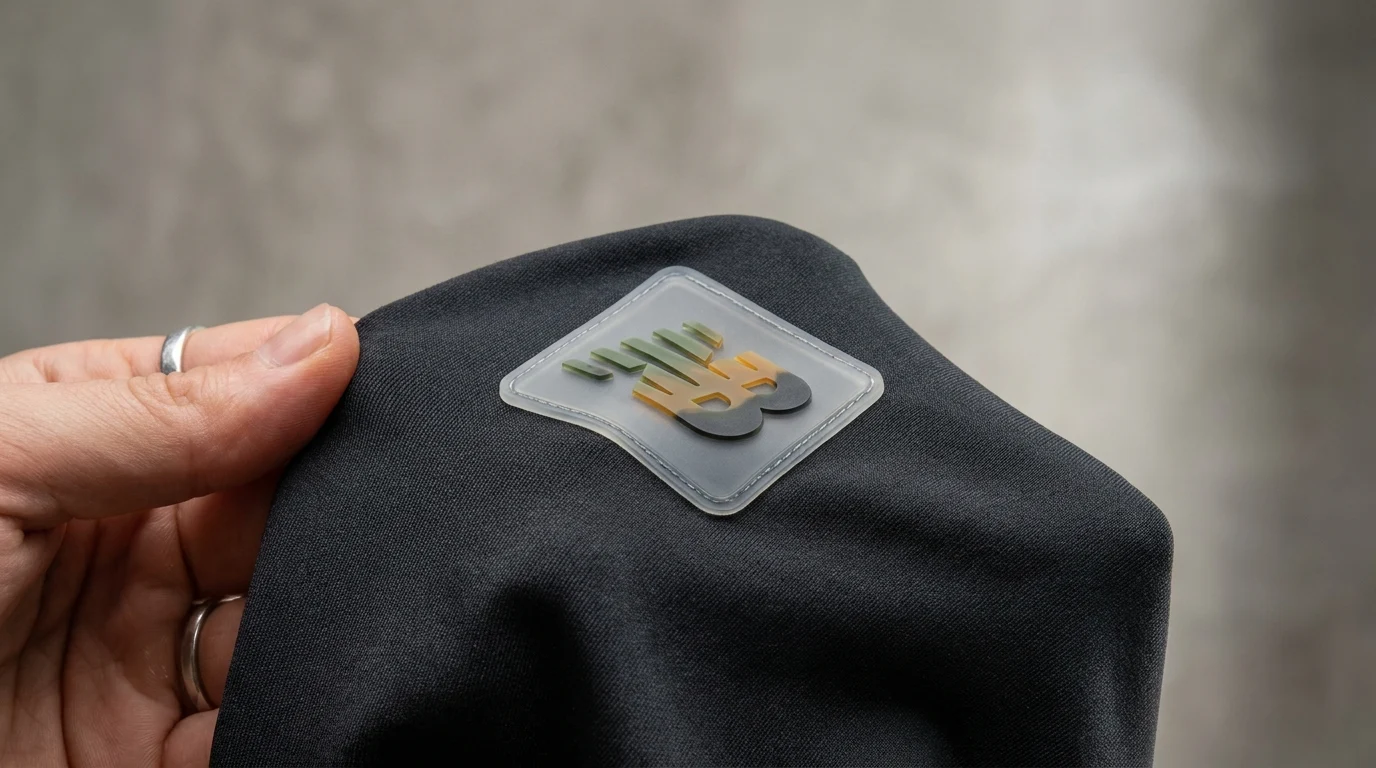
Silicone patches are moulded emblems made from silicone rubber. Silicone rubber is a thermoset elastomer, which means the polymer crosslinks permanently during curing and never re-melts. Silicone patches feel soft and stretchy, tolerate high temperatures, and appear most often as bonded labels on technical sportswear.
What Silicone Patches Are Made From
Silicone rubber is a polymer built on a silicon-and-oxygen backbone rather than a carbon-and-chlorine one. Silicone contains no plasticisers, so it is inherently phthalate-free and stays flexible without softening agents. Manufacturers cure silicone into shape, and once set the material resists heat far beyond the range a PVC patch tolerates. Custom patch suppliers most commonly apply silicone as a heat-transfer label pressed onto stretch garments, rather than as a thick moulded badge.
Common confusion
Are PVC and Silicone Patches the Same Thing?
No. PVC patches and silicone patches are not the same thing. PVC patches are made from polyvinyl chloride, a thermoplastic, and silicone patches are made from silicone rubber, a thermoset. The confusion is understandable, because both are soft, moulded and rubbery to the touch.
The confusion also comes from the trade. UK suppliers often call soft PVC a “silicone-style patch” because the finish looks and feels similar. That nickname describes soft PVC — it does not mean the patch contains silicone. A genuine silicone patch uses a different polymer, carries a higher price and behaves differently under heat. Knowing which material you are actually buying prevents a mismatch between the quote and the product.
Seven attributes
PVC vs Silicone Patches: Key Differences Explained
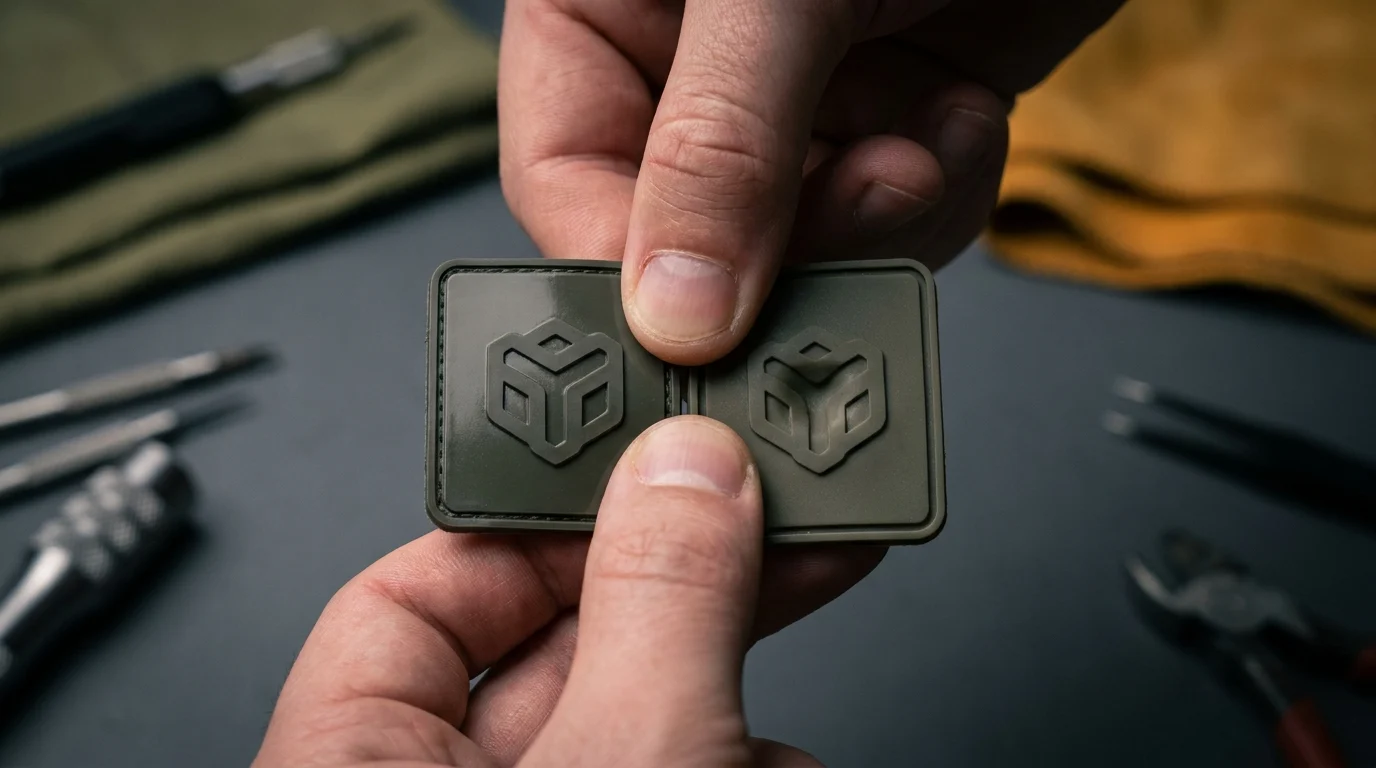
PVC patches and silicone patches diverge across seven attributes. Each attribute affects which material suits a given order.

Material and Chemistry
PVC is a thermoplastic, and silicone is a thermoset elastomer. A thermoplastic softens when reheated, while a thermoset stays fixed once cured. This single difference explains most of the behaviour below, from heat tolerance to feel.
Heat Resistance
Silicone patches resist heat better than PVC patches. Silicone withstands temperatures above 200°C, whereas PVC softens above 120°C. Neither material is supplied iron-on for that reason, and a domestic iron reaching 180°C would deform a PVC patch outright. Our guide on how PVC patches handle heat and UV explains where that threshold matters in real use.
Feel, Flexibility and Relief
PVC patches hold sharper relief, and silicone patches feel softer. PVC moulds into crisp 2D and 3D detail across multiple height levels, so faces, crests and fine separation read clearly on the finished badge. Silicone stretches further and feels more pliable, which suits a thin label on moving fabric but limits deep, multi-level relief. A buyer who needs a tactile, dimensional emblem chooses PVC; a buyer who needs a flat, flexible label on stretch fabric leans towards silicone.
Colour and Pantone Matching
PVC patches and silicone patches both reproduce brand colour to a Pantone reference. PVC carries an added advantage: pigment mixes through the full material depth, so colour survives abrasion instead of wearing off a printed surface. Our page on Pantone colour matching through full material depth sets out how that consistency holds across reorders.
Durability and Weather Resistance
PVC patches and silicone patches are both waterproof and UV-stable. Solid PVC absorbs no water and its die-cut edge seals during moulding, so no border frays. Silicone is equally weatherproof and heat-tolerant. In practice, both materials outlast embroidered thread outdoors, and the choice between them turns on feel, relief and cost rather than weatherproofing.
Compliance and Phthalates
Silicone is inherently phthalate-free, and custom PVC patches use phthalate-free plasticisers to meet UK requirements. Silicone needs no softening agents, so the question never arises. PVC does use plasticisers, and compliant suppliers specify phthalate-free grades that satisfy REACH. Our REACH and phthalate compliance page confirms the standards applied to every order.
Cost and UK Availability
PVC patches cost less than silicone patches and are far more widely produced. UK patch suppliers mould PVC as standard, which keeps unit prices low and lead times short. Silicone patches sit at a higher price point and appear less often in the custom patch market, mostly as sportswear labels rather than moulded badges.
Best-fit orders
When to Choose PVC Patches
PVC patches suit orders where relief, backing choice and cost matter most:
- Tactical and military morale patches on plate carriers, smocks and bergens
- Workwear and corporate uniforms that face industrial laundry cycles
- Outdoor and adventure gear exposed to rain, sunlight and abrasion
- Caps, beanies and streetwear needing a raised, premium front panel
- Motorcycle club colours cut to a bespoke die-cut shape

Best-fit orders
When to Choose Silicone Patches
Silicone patches suit a narrower set of orders where heat and stretch dominate:
- Technical activewear and sportswear labels that flex with the fabric
- Items in repeated high-heat contact where PVC would soften
- Specifications that require a phthalate-free material by default
- Simple, flat artwork applied as a bonded heat-transfer label
Attachment options
How PVC and Silicone Patches Attach
PVC patches attach four ways, and silicone patches attach mainly by heat-transfer bonding. PVC accepts hook-and-loop (velcro), sew-on, 3M adhesive or plain backing, so wearers can make an emblem removable, permanent or stuck to a hard surface. Silicone is usually bonded directly to fabric as a heat-pressed label and offers fewer removable options. The full range of PVC options sits on our backing options for PVC patches page.

Five-step order process
How to Order Custom PVC Patches in the UK
Ordering custom PVC patches follows five steps from enquiry to delivery:
- Send your artwork — upload a vector file, JPEG or sketch with your target size and quantity.
- Receive a quotation — pricing covers moulding, production, backing and UK delivery, quoted in GBP excluding VAT at 20%.
- Approve the digital proof — check colours against Pantone references and confirm dimensions.
- Production begins — mould engraving, pouring, curing and backing application.
- Delivery — tracked despatch to a UK address, including BFPO for serving personnel.
There is no minimum order quantity. Standard production takes 10 to 14 working days from proof approval, and express production takes 5 to 7 working days from proof approval. UK mainland delivery adds 1 to 2 working days. Full detail sits on our ordering, turnaround and delivery page.
In their words
Stories About Us and Our Customers
PVC patches end up on kit that works for a living. These are the orders behind them, the brief, the mould, and what the patch had to survive.
Tactical · Hook-and-loop
“The patches arrived clean, sharp and ready to go straight onto our kit bags.”
The hook-and-loop backing made it easy for the team to swap patches between packs, jackets and plate carriers without losing the raised detail in the badge.
Sarah Mitchell · Manchester
Workwear · Sew-on
“The PVC badges made our workwear look much more professional than printed logos.”
The sew-on finish gave the uniforms a permanent patch that could handle daily wear, wet weather and repeated cleaning.
James Carter · Birmingham
Streetwear · 3D relief
“The 3D finish gave our caps the premium detail we wanted.”
The raised rubber face helped the logo stand out on the front panel while keeping the colours consistent across the run.
Amelia Thompson · London
Outdoor · Waterproof
“The patches held up well on wet kit and still looked fresh after a muddy weekend.”
Waterproof PVC was chosen for bags and jackets where stitched thread would have absorbed moisture and frayed at the edge.
Oliver Hughes · Bristol
Club · Custom shape
“Our badge shape was unusual, but the final patch followed it neatly.”
The custom die-cut outline kept the club crest recognisable while the moulded edge avoided the bulky border of an embroidered patch.
Priya Shah · Leeds
Security · Velcro
“Being able to remove and replace patches between shifts has been really useful.”
Hook-and-loop backing was selected for staff jackets so roles and identifiers could be changed quickly without replacing garments.
Daniel Evans · Cardiff
Merchandise · Colour match
“The colours matched our brand better than the woven sample we tried before.”
Pantone-matched PVC helped keep the logo consistent for merchandise, reorder stock and event giveaways.
Hannah Wilson · Nottingham
Motorcycle · Jacket patch
“The rubber patch gave the jacket a cleaner, tougher finish.”
The club needed a weather-resistant badge that could handle rain, road grime and regular outdoor use.
Mark Robinson · Newcastle
Sports · Team kit
“The patch worked well on kit bags and training jackets.”
A flexible PVC build kept the team crest visible without adding a heavy stitched border to lightweight gear.
Rebecca Green · Sheffield
Repeat order · Reorder
“Reordering was simple because the mould was already set up.”
The second run kept the same dimensions, relief and colour references as the original patch order.
Thomas Baker · Glasgow
Tactical · Hook-and-loop
“The patches arrived clean, sharp and ready to go straight onto our kit bags.”
The hook-and-loop backing made it easy for the team to swap patches between packs, jackets and plate carriers without losing the raised detail in the badge.
Sarah Mitchell · Manchester
Workwear · Sew-on
“The PVC badges made our workwear look much more professional than printed logos.”
The sew-on finish gave the uniforms a permanent patch that could handle daily wear, wet weather and repeated cleaning.
James Carter · Birmingham
Streetwear · 3D relief
“The 3D finish gave our caps the premium detail we wanted.”
The raised rubber face helped the logo stand out on the front panel while keeping the colours consistent across the run.
Amelia Thompson · London
Outdoor · Waterproof
“The patches held up well on wet kit and still looked fresh after a muddy weekend.”
Waterproof PVC was chosen for bags and jackets where stitched thread would have absorbed moisture and frayed at the edge.
Oliver Hughes · Bristol
Club · Custom shape
“Our badge shape was unusual, but the final patch followed it neatly.”
The custom die-cut outline kept the club crest recognisable while the moulded edge avoided the bulky border of an embroidered patch.
Priya Shah · Leeds
Security · Velcro
“Being able to remove and replace patches between shifts has been really useful.”
Hook-and-loop backing was selected for staff jackets so roles and identifiers could be changed quickly without replacing garments.
Daniel Evans · Cardiff
Merchandise · Colour match
“The colours matched our brand better than the woven sample we tried before.”
Pantone-matched PVC helped keep the logo consistent for merchandise, reorder stock and event giveaways.
Hannah Wilson · Nottingham
Motorcycle · Jacket patch
“The rubber patch gave the jacket a cleaner, tougher finish.”
The club needed a weather-resistant badge that could handle rain, road grime and regular outdoor use.
Mark Robinson · Newcastle
Sports · Team kit
“The patch worked well on kit bags and training jackets.”
A flexible PVC build kept the team crest visible without adding a heavy stitched border to lightweight gear.
Rebecca Green · Sheffield
Repeat order · Reorder
“Reordering was simple because the mould was already set up.”
The second run kept the same dimensions, relief and colour references as the original patch order.
Thomas Baker · Glasgow
Questions answered
PVC vs Silicone Patches: Frequently Asked Questions
Are silicone patches better than PVC patches?
No
No. Neither patch is universally better. Silicone resists higher heat and feels softer, while PVC holds sharper relief, offers more backing options and costs less.
Are PVC and silicone patches the same?
No
No. PVC patches are made from polyvinyl chloride and silicone patches are made from silicone rubber. “Silicone-style” is only a nickname UK suppliers apply to soft PVC.
Do PVC patches contain phthalates?
No
No. Custom PVC patches are made with phthalate-free plasticisers that meet UK REACH requirements.
Can silicone patches be ironed on?
No
No. Silicone patches are not supplied as iron-on, and neither are PVC patches. Silicone is applied by heat-transfer bonding, and PVC uses velcro, sew-on or adhesive backing.
Which is cheaper, PVC or silicone patches?
PVC
PVC. PVC patches cost less than silicone patches and are more widely produced across the UK.
Final decision
Which Patch Should You Choose?
The decision comes down to what the emblem has to do. Reach for silicone when the badge lives on stretch fabric or meets repeated high heat. Reach for PVC when you want crisp 2D or 3D relief, full-depth Pantone colour, a choice of backings and a lower price — which covers most tactical, workwear, outdoor and headwear orders. For a broader view across every patch material, our patch comparison hub sets PVC against embroidered, woven, printed, leather and chenille alternatives.