Pantone PMS · Brand Colour Reproduction
Pantone Colour Matching for Custom PVC Patches
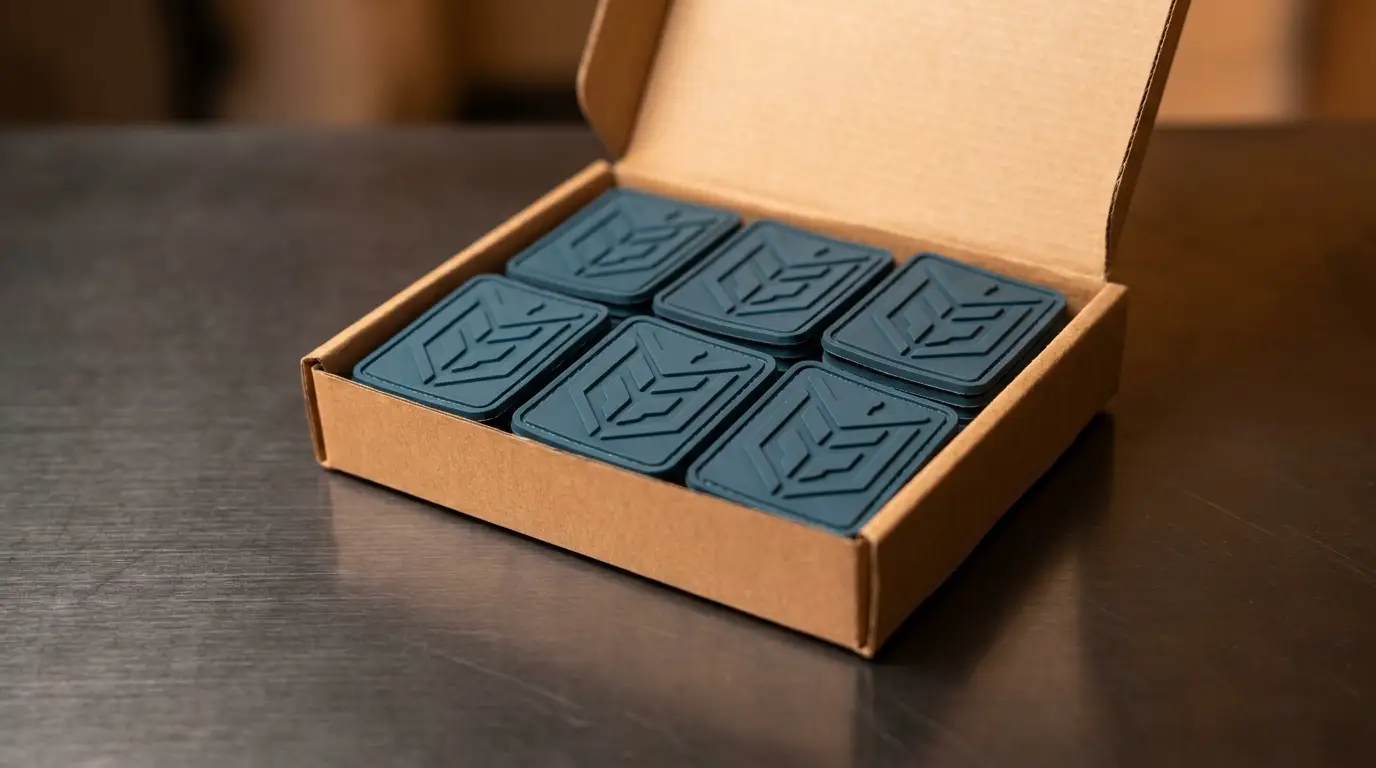
Pantone colour matching reproduces a brand colour to a numbered PMS reference, so every custom PVC patch carries the exact colour you specify. On a PVC patch the matched pigment is mixed into the liquid compound before moulding, which means the colour runs through the full depth of the rubber rather than sitting on the surface. This page explains how the match is made, how accurate it is, and how to supply the colour reference we work from.
Featured Client

Definition · Fixed colour reference
What Is Pantone Colour Matching?
Pantone colour matching is a colour-reproduction method that pins a colour to a single numbered reference from the Pantone Matching System. The reference removes ambiguity: "navy blue" describes hundreds of shades, but a PMS code describes one. A custom PVC patch made to that code reproduces your brand colour precisely, and every reorder holds the same value.
Brand colour is an asset, and colour consistency protects it. A logo that shifts hue between a website, a uniform and a patch reads as careless, so a fixed reference keeps the colour identical across every surface it appears on.
What Is a Pantone (PMS) Code?
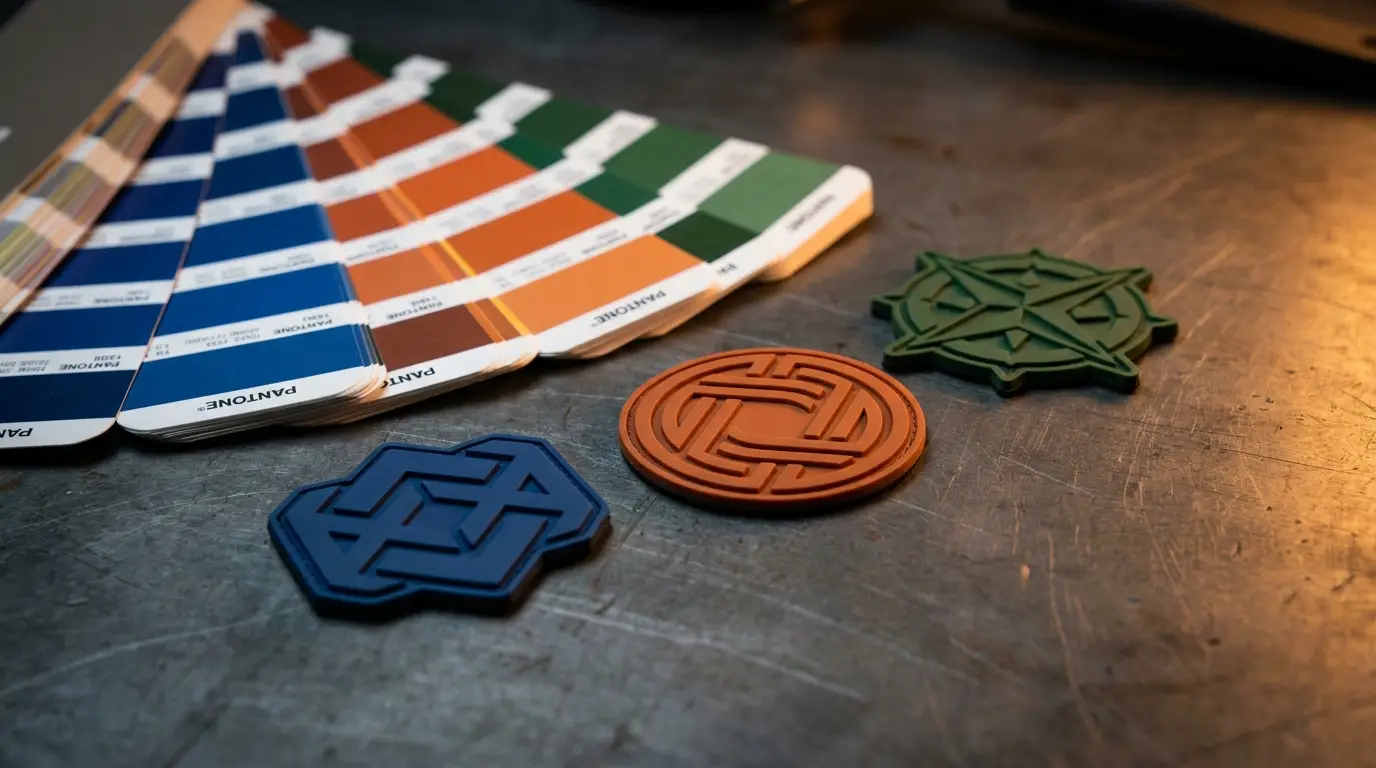
A Pantone code is a standardised identifier for a single spot colour, written as a number followed by a suffix such as C for coated stock. Designers hold these codes in brand guidelines because a PMS code communicates one exact hue with no interpretation. We match against the solid-coated range, because coated references give the closest read to the smooth, sealed surface of moulded PVC.
Why Brands Specify Pantone Colours
Brands specify Pantone colours to lock a colour across suppliers, materials and print runs. The reasons are consistent across the businesses we work with:
- Consistency — the same hue appears on the patch, the packaging and the shopfront
- Communication — a single code replaces a subjective colour description
- Reproducibility — a saved reference makes every future reorder match the first
- Accountability — the proof is checked against a fixed standard, not a memory of the colour
A specified colour is only useful if the manufacturing method can hold it. On a PVC patch, colour matching begins in the material itself.
Inside the material
How Pantone Matching Works on a PVC Patch
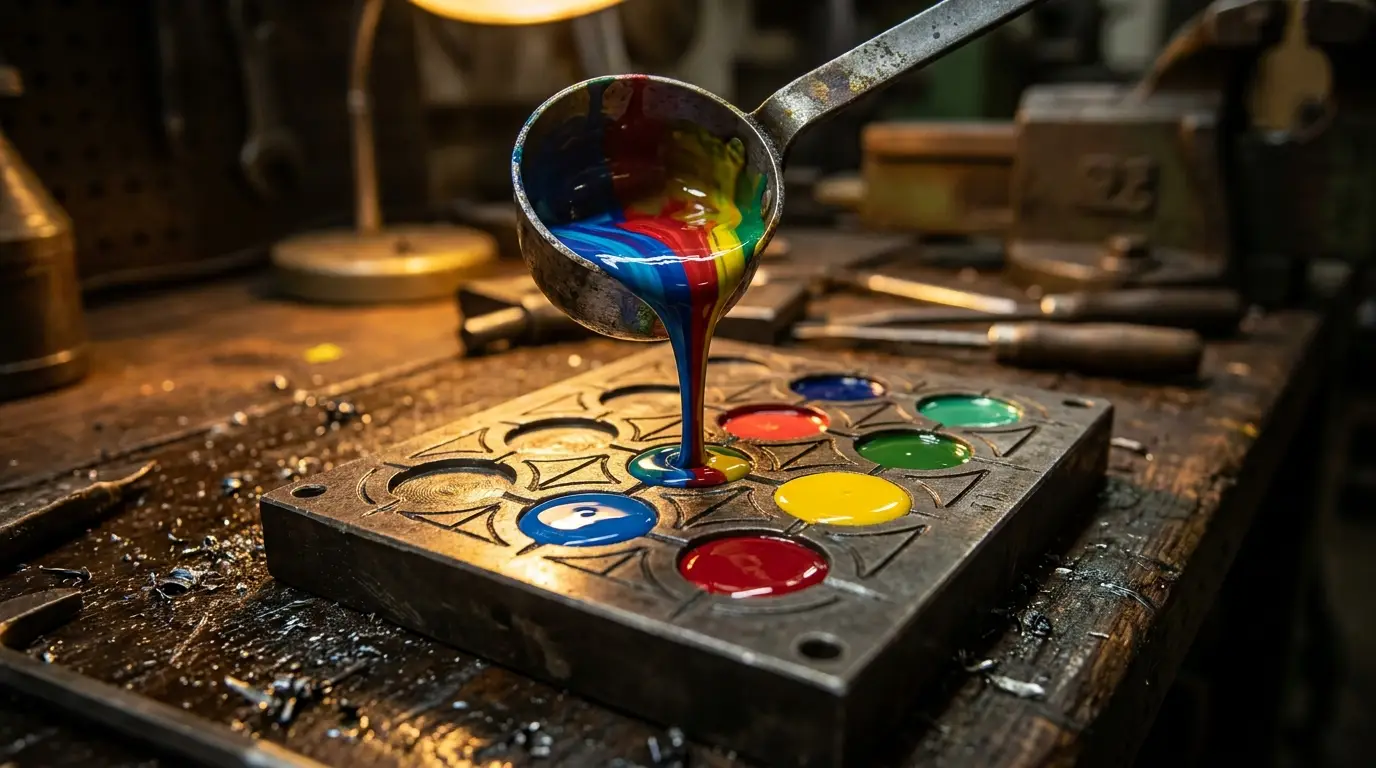
Pantone matching on a PVC patch happens before the patch has a shape. Pigment is mixed into the liquid PVC compound to hit the target PMS reference, and only then is the coloured compound poured into the mould. The colour is therefore part of the material, not a coating applied afterwards.
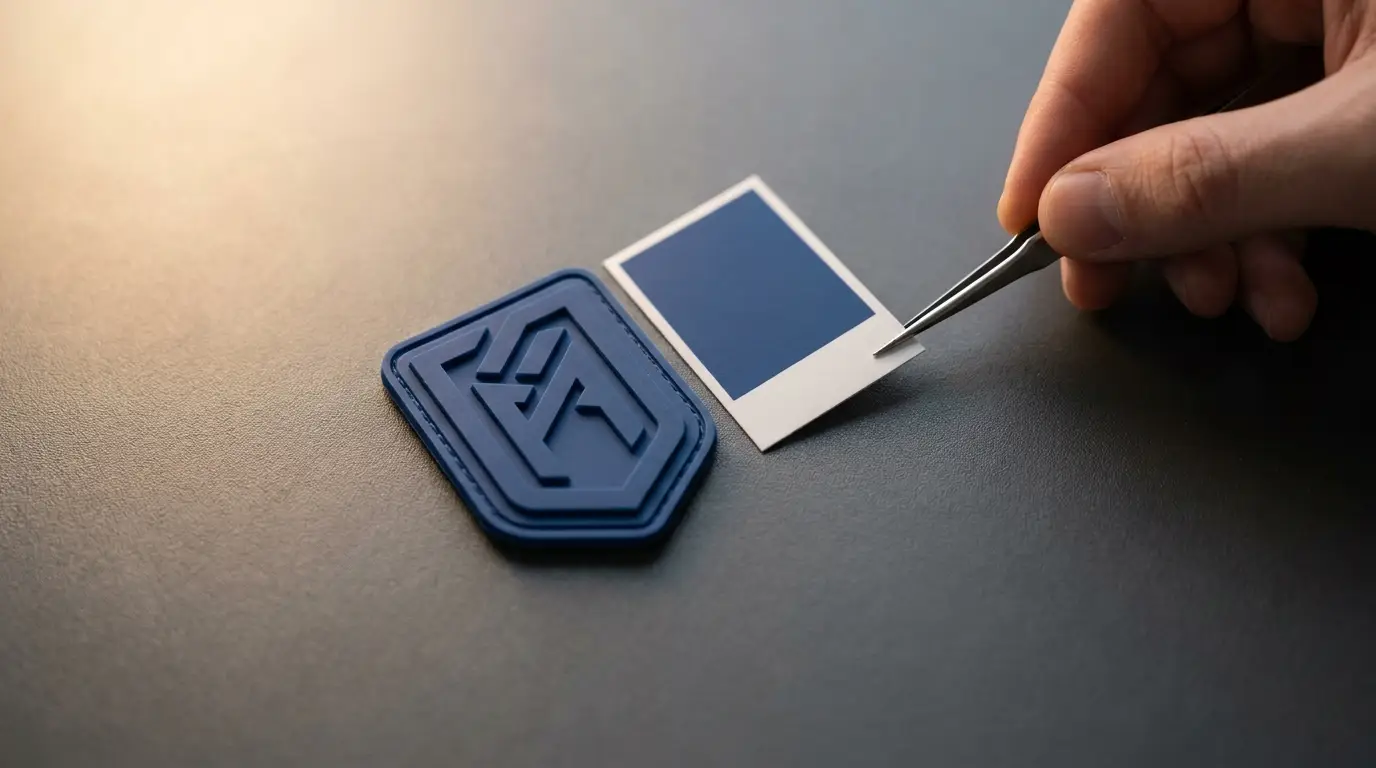
Pigment Mixed Through the Full Depth
Pigment sits inside the PVC rather than printed on top of it. Matched colour runs through the full depth of the patch, which is the reason a PVC patch does not fade, peel or crack the way a printed transfer does. A scratch on the surface reveals the same colour underneath, because there is no separate colour layer to wear away.
One Colour, One Mould Recess
Each colour occupies its own recess in the engraved mould. Separate recesses keep colours physically apart during the pour, so a matched red meets a matched gold along a clean moulded edge with no bleed and no outline. This colour separation is what lets a multi-colour logo hold sharp boundaries between shades. Because each colour is mixed and poured individually, the number of colours in your artwork affects tooling and price, a factor covered on our PVC patch pricing page.
Accuracy · Proof-led
How Accurate Is Pantone Matching on PVC?
Pantone matching on PVC is accurate to the nearest solid pigment mix for your specified code. We match to the closest Pantone solid-coated reference and confirm the result on your digital proof before production begins, so the colour is agreed rather than assumed. Fine artwork detail, 3D relief and viewing angle can influence how a shade reads under different light, and the proof stage exists to settle exactly that.
Solid-Coated Pantone as the Reference Standard
Solid-coated Pantone is the reference standard for moulded rubber. Coated swatches read closer to the sealed, low-porosity surface of cured PVC than uncoated swatches do, so a coated code predicts the finished colour more reliably. Supplying the coated version of your code — the number ending in C — gives the tightest match.
Colour Fastness and UV Stability
Solid pigment resists fading under sunlight. Heat stabilisers in the compound hold the hue during prolonged UV exposure, and the pigment's position inside the material protects it from surface abrasion. A Pantone-matched PVC patch therefore keeps its colour through rain, machine washing at 40°C and years of outdoor wear — the durability that moved workwear, marine and tactical users to rubber in the first place. The full explanation of pigment and material behaviour sits in our guide to what PVC patch material is made from.
Colour inputs · Four routes
How to Supply Your Colour Reference
Supplying a colour reference tells us the exact target to mix against. A Pantone code gives the most accurate result, but we convert other colour values or match from a physical sample when a code is not available. The clearer the reference, the tighter the match.

Supplying a Pantone (PMS) Code
A Pantone code is the ideal reference. Send the solid-coated code for each colour in your artwork, and we mix pigment directly to that value. This is the fastest route to an exact match, because no conversion or interpretation stands between your brand colour and the patch.
Converting CMYK, RGB and HEX to Pantone
CMYK, RGB and HEX values convert to the nearest Pantone reference. A print file often carries CMYK, a screen graphic carries RGB or HEX, and each maps to a closest solid-coated equivalent. Conversion introduces a small shift, because screen and print colour spaces do not align perfectly with solid pigment, so we confirm the converted colour on your proof.
Matching From a Physical Sample
A physical sample can be matched by eye against the Pantone system. A fabric swatch, a painted chip or a previous patch is read against solid-coated references to find the closest code, which then becomes the mixing target. Supplying a physical sample suits brands whose original colour predates any digital reference.
| Reference type | What we do with it | Match accuracy |
|---|---|---|
| Pantone (PMS) code | Mix pigment directly to the code | Highest |
| CMYK value | Convert to nearest solid-coated Pantone | High |
| RGB / HEX value | Convert to nearest solid-coated Pantone | High |
| Physical sample | Read against Pantone references by eye | Close, confirmed on proof |
A confirmed reference alongside the right artwork file produces the cleanest result, which is why we also set out our PVC patch artwork requirements separately.
Material comparison
Pantone Matching vs Colour Matching on Other Patches
Colour matching works differently on each patch material, and the method sets the ceiling on accuracy. PVC matches through solid pigment, embroidered and woven patches match against a fixed thread palette, and printed patches match through CMYK ink. The comparison below shows where each method holds a colour and where it drifts.
| Attribute | PVC Patches | Embroidered Patches | Printed Patches | Woven Patches |
|---|---|---|---|---|
| Colour method | Pigment mixed to PMS | Nearest thread on a chart | CMYK ink | Nearest thread on a chart |
| Colour depth | Full depth of material | Surface thread | Surface print | Surface thread |
| Pantone accuracy | High, mixed to code | Limited to thread range | Close, ink approximation | Limited to thread range |
| Colour fastness | High, UV-stable | Medium | Lower, can fade | Medium |
| Best for | Exact brand colour outdoors | Traditional finish | Photographic colour | Fine flat detail |
Embroidered and woven patches match colour by selecting the closest available thread, so a brand hue lands near its target rather than on it. Printed patches reproduce colour through CMYK ink, which handles photographic blends but approximates a solid spot colour. PVC patches hold an exact mixed colour through the full depth of the material, an advantage explained further in our comparison of PVC and embroidered patches and PVC and printed patches.
Artwork → proof → production
How to Order Pantone-Matched PVC Patches
Ordering a Pantone-matched patch follows four steps from artwork to production. Matching is included on every order, and there is no minimum order quantity.
- Send your artwork and colour reference — supply your file with a Pantone code for each colour, or a CMYK, RGB, HEX value or physical sample.
- Receive a digital proof — the proof shows your matched colours so you can check each hue before anything is cut.
- Approve the proof — approval confirms the colours and locks the design; matched colours are signed off at this stage, which is why the proof approval step matters.
- Production begins — pigment is mixed to your references, poured and cured into the finished patch.
Standard production takes 10 to 14 working days from proof approval, and express production takes 5 to 7 working days from proof approval. UK mainland delivery adds 1 to 2 working days. All prices are quoted in pounds sterling and exclude VAT at 20%.


In their words
Stories About Us and Our Customers
PVC patches end up on kit that works for a living. These are the orders behind them, the brief, the mould, and what the patch had to survive.
Tactical · Hook-and-loop
“The patches arrived clean, sharp and ready to go straight onto our kit bags.”
The hook-and-loop backing made it easy for the team to swap patches between packs, jackets and plate carriers without losing the raised detail in the badge.
Sarah Mitchell · Manchester
Workwear · Sew-on
“The PVC badges made our workwear look much more professional than printed logos.”
The sew-on finish gave the uniforms a permanent patch that could handle daily wear, wet weather and repeated cleaning.
James Carter · Birmingham
Streetwear · 3D relief
“The 3D finish gave our caps the premium detail we wanted.”
The raised rubber face helped the logo stand out on the front panel while keeping the colours consistent across the run.
Amelia Thompson · London
Outdoor · Waterproof
“The patches held up well on wet kit and still looked fresh after a muddy weekend.”
Waterproof PVC was chosen for bags and jackets where stitched thread would have absorbed moisture and frayed at the edge.
Oliver Hughes · Bristol
Club · Custom shape
“Our badge shape was unusual, but the final patch followed it neatly.”
The custom die-cut outline kept the club crest recognisable while the moulded edge avoided the bulky border of an embroidered patch.
Priya Shah · Leeds
Security · Velcro
“Being able to remove and replace patches between shifts has been really useful.”
Hook-and-loop backing was selected for staff jackets so roles and identifiers could be changed quickly without replacing garments.
Daniel Evans · Cardiff
Merchandise · Colour match
“The colours matched our brand better than the woven sample we tried before.”
Pantone-matched PVC helped keep the logo consistent for merchandise, reorder stock and event giveaways.
Hannah Wilson · Nottingham
Motorcycle · Jacket patch
“The rubber patch gave the jacket a cleaner, tougher finish.”
The club needed a weather-resistant badge that could handle rain, road grime and regular outdoor use.
Mark Robinson · Newcastle
Sports · Team kit
“The patch worked well on kit bags and training jackets.”
A flexible PVC build kept the team crest visible without adding a heavy stitched border to lightweight gear.
Rebecca Green · Sheffield
Repeat order · Reorder
“Reordering was simple because the mould was already set up.”
The second run kept the same dimensions, relief and colour references as the original patch order.
Thomas Baker · Glasgow
Tactical · Hook-and-loop
“The patches arrived clean, sharp and ready to go straight onto our kit bags.”
The hook-and-loop backing made it easy for the team to swap patches between packs, jackets and plate carriers without losing the raised detail in the badge.
Sarah Mitchell · Manchester
Workwear · Sew-on
“The PVC badges made our workwear look much more professional than printed logos.”
The sew-on finish gave the uniforms a permanent patch that could handle daily wear, wet weather and repeated cleaning.
James Carter · Birmingham
Streetwear · 3D relief
“The 3D finish gave our caps the premium detail we wanted.”
The raised rubber face helped the logo stand out on the front panel while keeping the colours consistent across the run.
Amelia Thompson · London
Outdoor · Waterproof
“The patches held up well on wet kit and still looked fresh after a muddy weekend.”
Waterproof PVC was chosen for bags and jackets where stitched thread would have absorbed moisture and frayed at the edge.
Oliver Hughes · Bristol
Club · Custom shape
“Our badge shape was unusual, but the final patch followed it neatly.”
The custom die-cut outline kept the club crest recognisable while the moulded edge avoided the bulky border of an embroidered patch.
Priya Shah · Leeds
Security · Velcro
“Being able to remove and replace patches between shifts has been really useful.”
Hook-and-loop backing was selected for staff jackets so roles and identifiers could be changed quickly without replacing garments.
Daniel Evans · Cardiff
Merchandise · Colour match
“The colours matched our brand better than the woven sample we tried before.”
Pantone-matched PVC helped keep the logo consistent for merchandise, reorder stock and event giveaways.
Hannah Wilson · Nottingham
Motorcycle · Jacket patch
“The rubber patch gave the jacket a cleaner, tougher finish.”
The club needed a weather-resistant badge that could handle rain, road grime and regular outdoor use.
Mark Robinson · Newcastle
Sports · Team kit
“The patch worked well on kit bags and training jackets.”
A flexible PVC build kept the team crest visible without adding a heavy stitched border to lightweight gear.
Rebecca Green · Sheffield
Repeat order · Reorder
“Reordering was simple because the mould was already set up.”
The second run kept the same dimensions, relief and colour references as the original patch order.
Thomas Baker · Glasgow
Frequently asked questions
Pantone Colour Matching — Frequently Asked Questions
Can you match my exact brand colour?YES
Yes. We match your brand colour to the closest Pantone solid-coated reference and mix that pigment through the full depth of the patch.
Do you charge extra for Pantone colour matching?NO
No. Pantone matching is included on every custom PVC patch order.
Will a Pantone-matched colour fade over time?NO
No. The pigment sits inside the PVC rather than on the surface, so the colour resists sunlight, washing and abrasion.
Can you match a colour without a Pantone code?YES
Yes. We convert a CMYK, RGB or HEX value, or match from a physical sample, to the nearest Pantone reference.
Is Pantone matching available on 3D patches?YES
Yes. Colour matching works the same on 2D and 3D relief, because the pigment is set before the mould shapes the surface.
Can metallic or fluorescent Pantone colours be matched?YES
Yes, within the limits of solid pigment. Metallic and fluorescent references are reproduced as closely as PVC pigment allows and confirmed on your proof.
Colour consistency · Every reorder
Colour That Stays True to Your Brand
A Pantone reference turns a brand colour into a fixed instruction, and PVC turns that instruction into a colour set permanently in the material. Because the pigment is mixed before the pour and carried through the full depth, the finished patch holds its hue against sun, rain and laundry long after a printed colour would have shifted. Send your artwork with a PMS code, a colour value or a sample, approve the matched colours on your proof, and every patch in the run — and every reorder after it — will carry the same colour your brand already owns.