
Material Guide · Flexible vs Rigid PVC
Soft PVC vs Hard PVC: What Is the Difference for Patches?
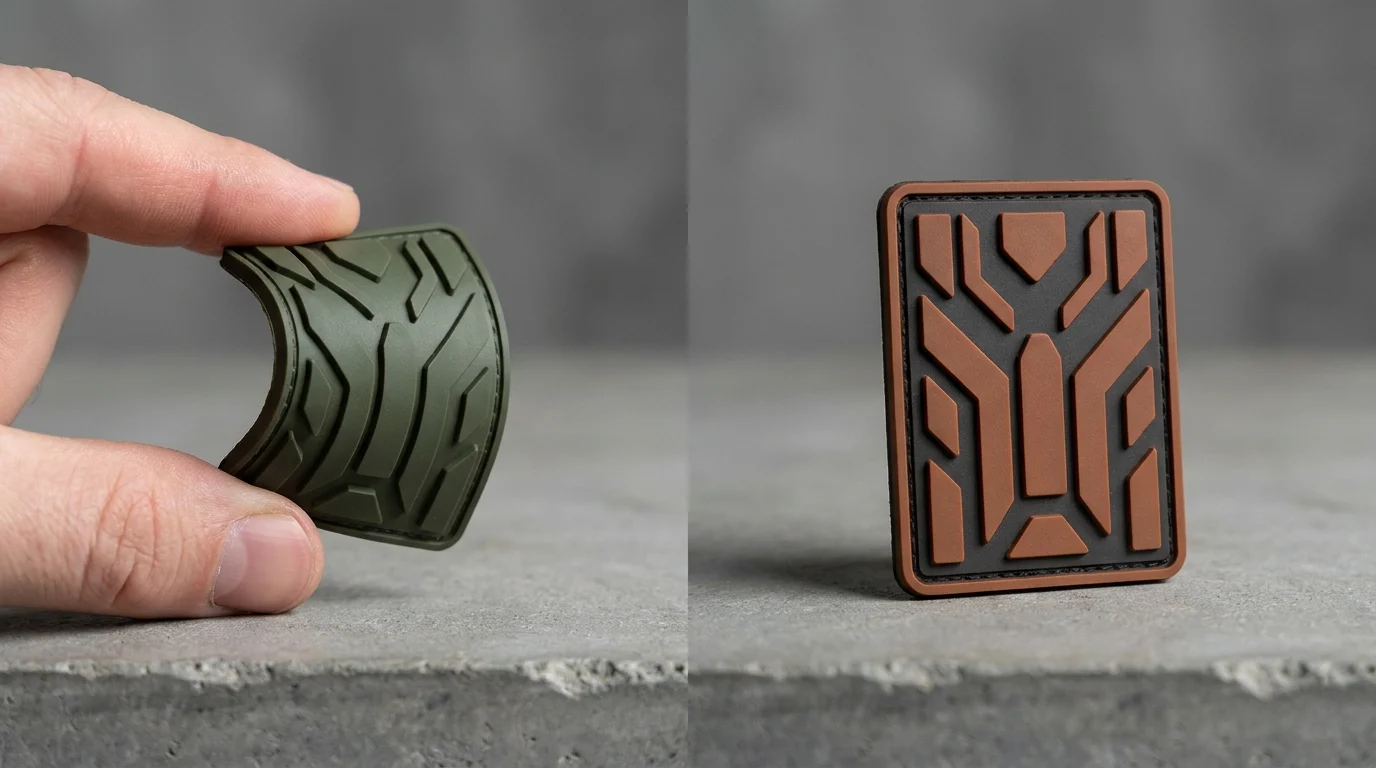
Soft PVC and hard PVC are two grades of polyvinyl chloride separated by one variable: plasticiser content. Soft PVC contains plasticisers and stays flexible; hard PVC contains almost none and stays rigid. Custom PVC patches are made from soft PVC, because a patch bends with the garment it sits on. Hard PVC serves rigid products instead, such as keyrings and zip pulls.
Featured Client

Definition
What Is the Difference Between Soft PVC and Hard PVC?
Soft PVC is flexible and hard PVC is rigid. Both materials start as the same base polymer, polyvinyl chloride, so the raw chemistry is identical. The difference appears when the manufacturer adds plasticisers to the blend. Plasticisers sit between the polymer chains and let them slide, which makes soft PVC bend, fold and return to shape. Hard PVC, also called rigid PVC or uPVC, receives little or no plasticiser, so its chains lock together and the finished part stays stiff.
That single processing choice decides where each grade belongs. Soft PVC suits anything worn or handled — a patch, a wristband, a flexible label. Hard PVC suits anything that needs to hold a fixed form, such as a fob or a fitting. The base polymer stays the same; the plasticiser sets the behaviour. For the full breakdown of the blend behind the flexible grade, see what PVC patch material is made from.
The two grades also carry different trade names, which is where much of the confusion starts. Soft PVC is sold as flexible PVC, plasticised PVC or, in patch terms, rubber patch material. Hard PVC is sold as rigid PVC or uPVC, the same family used for many moulded fittings. A quick hand test separates them in practice: soft PVC gives under a fingernail and springs back, while hard PVC resists the press and holds firm. That difference in give is the plasticiser doing its work.
Hardness
The Hardness Scale That Separates Them (Shore Durometer)
Hardness is measured on the Shore durometer scale. The scale runs across two bands, Shore A and Shore D, and each band suits a different family of plastics and rubbers. A durometer presses a standard indenter into the material and reads how far it sinks, which converts flexibility into a comparable number. Soft PVC and hard PVC fall on opposite bands of this scale.
Soft PVC on the Shore A Scale
Soft PVC measures on the Shore A scale. The Shore A band covers flexible rubbers and pliable plastics, so a soft PVC patch reads within it. A lower Shore A number means a softer, more pliable material, and a higher number means a firmer flex that still bends. Patch-grade soft PVC sits toward the firmer end of Shore A, which gives a patch enough body to hold its moulded relief while still folding with fabric. Too soft, and the raised detail would slump; too hard, and the patch would resist the garment. The firmer Shore A grade balances those two demands, holding a crisp 2D or 3D face without sacrificing flex.
Hard PVC on the Shore D Scale
Hard PVC measures on the Shore D scale. The Shore D band covers rigid plastics that resist indentation, so a rigid PVC keyring reads within it. The two scales overlap only at their extremes, where the hardest Shore A grade meets the softest Shore D grade. Below that crossover a material bends; above it a material stays firm. Hard PVC sits above the crossover, which is why it holds its shape under pressure.
Patch grade
What Soft PVC Is and Where It Is Used
Soft PVC is the flexible, plasticised grade of polyvinyl chloride. Soft PVC is the grade used for every custom PVC patch, and it defines how the product performs on a garment.
Properties of Soft PVC
Soft PVC combines flexibility with durability. The grade carries several measurable attributes that matter on a patch:
- Flexible — soft PVC bends with the garment and returns to shape without cracking.
- Waterproof — solid PVC absorbs no moisture, so rain and immersion leave no mark.
- Colour-fast — pigment runs through the full depth of the material rather than sitting on the surface.
- Machine washable — the grade withstands repeated laundering at 40°C.
- Non-fraying — die-cut edges seal during moulding, so no border unravels.
Each attribute traces back to the plasticiser content. Flexibility comes first, and the rest follow from a solid, sealed rubber body.
Why PVC Patches Are Made From Soft PVC
PVC patches are made from soft PVC because a patch must move with the fabric beneath it. A jacket sleeve bends, a plate carrier flexes and a kit bag folds, and a rigid badge would crack or pop free under that movement. Soft PVC absorbs the flex and stays bonded. The grade also accepts every backing type the site offers — sew-on, hook-and-loop and adhesive — because a flexible base sits flat against a garment. A stiff base would lift at the corners and break the bond, which is exactly the failure the soft grade avoids.
Soft PVC is the standard grade for custom patches, so a buyer does not select it as an option; every order arrives in the flexible material by default. The same soft grade repeats on every reorder, because the mould and the blend stay fixed once a design is approved. Thickness is set separately from grade, and the difference between 2D and 3D builds is covered in PVC patch thickness explained.
Rigid grade
What Hard PVC Is and Where It Is Used
Hard PVC is the rigid, unplasticised grade of polyvinyl chloride. Hard PVC is not used for patches, because it cannot flex with fabric; instead it suits standalone products that need to hold their form.
Properties of Hard PVC
Hard PVC holds a fixed shape. The grade resists bending, keeps sharp moulded edges and shrugs off surface scratching better than the softer grade. Those same properties make it wrong for a garment: a rigid part does not conform to a moving surface, and it works loose from fabric over time. Hard PVC therefore earns its place on rigid items rather than worn ones. This is the honest split — soft PVC wins on wearability, and hard PVC wins on shape retention.
Rigid PVC Products (Keyrings, Zip Pulls, Luggage Tags)
Hard PVC is used for keyrings, zip pulls and luggage tags. These products hang, knock together and take handling, so a stiff body serves them better than a soft one. A rigid keyring keeps its edge against a bunch of keys, and a rigid zip pull holds its grip shape through repeated use. The moulding process mirrors patch production — an engraved mould, poured PVC, pigment set through the depth — but the blend shifts to the rigid grade. Colour still runs through the full material, so a hard PVC product resists fading in the same way a patch does. Explore the rigid-grade range through the hard PVC keyrings and PVC zip pulls pages.
Side-by-side
Soft PVC vs Hard PVC — Comparison Table
The table below sets the two grades against the attributes that decide which one a product needs.
| Attribute | Soft PVC | Hard PVC |
|---|---|---|
| Also known as | Flexible / plasticised PVC | Rigid PVC / uPVC |
| Plasticiser content | High | Little to none |
| Hardness scale | Shore A | Shore D |
| Feel | Bends, returns to shape | Stiff, holds shape |
| Attaches to fabric | Yes (sew-on, velcro, adhesive) | No |
| Used for | Custom PVC patches | Keyrings, zip pulls, luggage tags |
| Best when | The item is worn on a garment or gear | The item is a standalone rigid product |
Selection
Which PVC Grade Should You Choose?
Match the grade to the job. Choose soft PVC when the item is worn or attached to fabric, because flexibility keeps a patch bonded and intact through folding, washing and daily wear. Choose hard PVC when the item stands alone and needs to hold a fixed form, such as a keyring or a zip pull. The decision rarely sits with the buyer on a patch order, because a patch is always the soft grade by definition; the choice matters most when you order across product types. Readers who confuse the rigid grade with a different material often mean silicone, and that distinction is covered on how PVC patches compare with silicone patches.
In their words
Stories About Us and Our Customers
PVC patches end up on kit that works for a living. These are the orders behind them, the brief, the mould, and what the patch had to survive.
Tactical · Hook-and-loop
“The patches arrived clean, sharp and ready to go straight onto our kit bags.”
The hook-and-loop backing made it easy for the team to swap patches between packs, jackets and plate carriers without losing the raised detail in the badge.
Sarah Mitchell · Manchester
Workwear · Sew-on
“The PVC badges made our workwear look much more professional than printed logos.”
The sew-on finish gave the uniforms a permanent patch that could handle daily wear, wet weather and repeated cleaning.
James Carter · Birmingham
Outdoor · Waterproof
“The patches held up well on wet kit and still looked fresh after a muddy weekend.”
Waterproof PVC was chosen for bags and jackets where stitched thread would have absorbed moisture and frayed at the edge.
Oliver Hughes · Bristol
Repeat order · Reorder
“Reordering was simple because the mould was already set up.”
The second run kept the same dimensions, relief and colour references as the original patch order.
Thomas Baker · Glasgow
Tactical · Hook-and-loop
“The patches arrived clean, sharp and ready to go straight onto our kit bags.”
The hook-and-loop backing made it easy for the team to swap patches between packs, jackets and plate carriers without losing the raised detail in the badge.
Sarah Mitchell · Manchester
Workwear · Sew-on
“The PVC badges made our workwear look much more professional than printed logos.”
The sew-on finish gave the uniforms a permanent patch that could handle daily wear, wet weather and repeated cleaning.
James Carter · Birmingham
Outdoor · Waterproof
“The patches held up well on wet kit and still looked fresh after a muddy weekend.”
Waterproof PVC was chosen for bags and jackets where stitched thread would have absorbed moisture and frayed at the edge.
Oliver Hughes · Bristol
Repeat order · Reorder
“Reordering was simple because the mould was already set up.”
The second run kept the same dimensions, relief and colour references as the original patch order.
Thomas Baker · Glasgow
Answers
Soft PVC vs Hard PVC — Frequently Asked Questions
Are PVC patches made from soft or hard PVC?SOFT PVC
Soft PVC. Patches are moulded from flexible, plasticised PVC so they bend with the garment instead of cracking, and the soft grade accepts sew-on, hook-and-loop and adhesive backing.
Is hard PVC used for patches?NO
No. Hard PVC is rigid and cannot flex with fabric, so it is used for keyrings, zip pulls and luggage tags rather than patches.
Are soft PVC and hard PVC the same material?YES AND NO
Yes and no. Both grades are polyvinyl chloride, but soft PVC contains plasticisers that make it flexible and hard PVC contains almost none, which makes it rigid.
Is soft PVC durable?YES
Yes. Soft PVC is waterproof, colour-fast and machine washable at 40°C, and it stays flexible enough to fold and wear without the pigment fading or the edge fraying.
Summary
Key Takeaways
Grade, not chemistry, is what separates these two materials. Plasticiser turns the same polyvinyl chloride into either a pliable patch body or a rigid product body, and the Shore durometer scale records the gap between them. Every custom PVC patch takes the flexible, Shore A grade so it moves with the fabric and survives the wash; keyrings, zip pulls and luggage tags take the rigid, Shore D grade so they hold their form in the hand. Pick the grade by the job the item does, and the material follows.