Comparison Guide · PVC vs Chenille
PVC Patches vs Chenille Patches
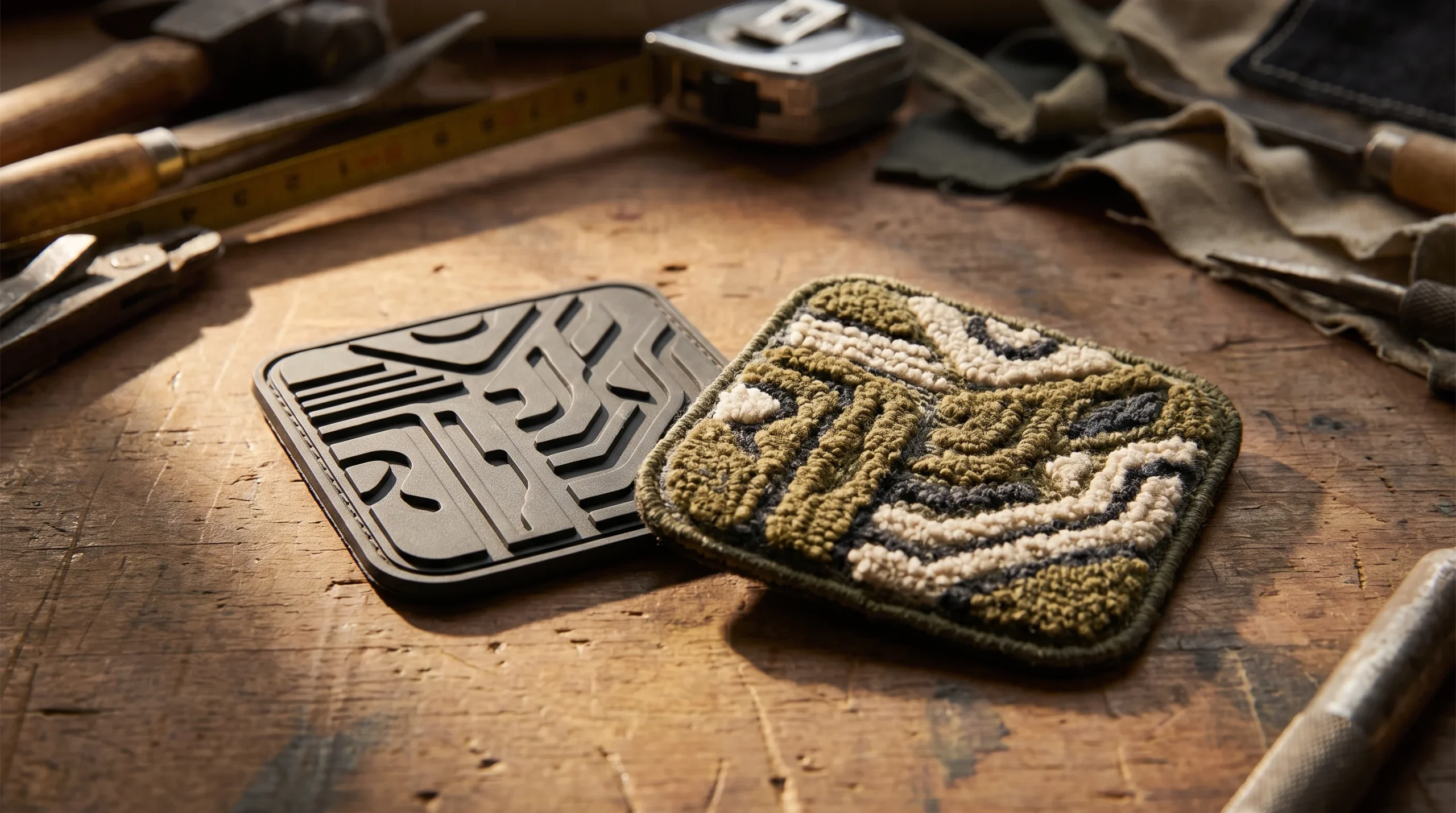
PVC patches are moulded rubber badges made from polyvinyl chloride, produced in 2D or 3D relief at a finished thickness of 2.5mm to 3.5mm. Chenille patches are yarn-tufted badges with a raised, plush pile stitched onto a twill base. This guide compares PVC patches and chenille patches across material, detail, durability, texture and cost, so you choose the right custom patch for your garment, budget and finish. Both types are made bespoke in the UK to your own artwork.
Featured Client
Side-by-side comparison
PVC vs Chenille Patches at a Glance
PVC patches and chenille patches solve different problems. The table below sets the two side by side across the attributes that decide most orders.
| Attribute | PVC Patches | Chenille Patches |
|---|---|---|
| Material | Polyvinyl chloride (moulded rubber) | Chenille yarn on a twill base |
| Surface | Smooth 2D or 3D moulded relief | Raised, fuzzy yarn pile (loop or cut) |
| Detail capacity | High — fine lines and small text | Low — large letters and simple shapes |
| Minimum text height | 5mm (2D) / 6mm (3D) | Large lettering only |
| Thickness | 2.5mm (2D) / 3.5mm (3D) | Thick, plush pile |
| Waterproof | Yes | No |
| Wash tolerance | 40°C machine wash | Low — pile absorbs water and can mat |
| Colour system | Pantone (PMS), full-depth pigment | Yarn colour range |
| Edge finish | Die-cut, sealed | Bordered (often merrow or satin stitch) |
| Backing | Velcro, sew-on, adhesive, plain | Sew-on or iron-on |
| Best use | Outdoor, tactical, workwear, logos | Varsity, collegiate, retro streetwear |
| Minimum order | None | Typically higher |
PVC leads on durability, detail and weather resistance. Chenille leads on tactile texture and the classic varsity look. The rest of this guide explains why each result holds.
What Are PVC Patches?
PVC patches are flexible emblems moulded from liquid polyvinyl chloride inside an engraved metal die. Pigment runs through the full depth of the rubber rather than sitting on the surface, so the colour does not fade, peel or crack. The die-cut edge seals during moulding, which means no border frays over time. PVC construction reproduces logos, crests and lettering as raised relief instead of stitched thread.
PVC patches carry several trade names, including rubber patches, moulded patches and morale patches. The material stays the same in each case: soft, plasticised polyvinyl chloride. For the full production sequence, see how PVC patches are made and what PVC patch material is.
What Are Chenille Patches?
Chenille patches are textured badges built from chenille yarn tufted through a twill backing. A chenille machine loops the yarn to form a raised pile, and a stitched border contains the edge. Chenille produces two surface styles: loop pile, which curls, and cut pile, which reads flat and velvety. The finished patch delivers a soft, three-dimensional texture that people associate with varsity letters and collegiate kit.
Chenille suits bold, large-format designs. Chunky yarn cannot hold fine lines or small type, so chenille works best for single letters, numbers and simple shapes rather than detailed artwork. This trade-off between texture and detail is the first place PVC and chenille diverge.
Six practical measures
Key Differences Between PVC and Chenille Patches
PVC and chenille differ across six practical measures. Each measure points a different type of buyer toward a different result.
Material and Construction
PVC patches are moulded; chenille patches are tufted. A metal die shapes molten PVC into solid rubber relief, while a chenille machine stitches yarn loops into a soft pile on twill. Moulding produces a sealed, uniform surface. Tufting produces a raised, fibrous surface. The two processes create two entirely different objects from the same starting brief.
Detail and Text Reproduction
PVC patches hold fine detail; chenille patches do not. Moulding reproduces thin lines, gradients of relief and text down to 5mm on 2D patches and 6mm on 3D patches. Chenille yarn is thick, so small type and intricate logos blur into the pile. Brands with a detailed emblem choose PVC, and teams with a single bold letter choose chenille.
Durability and Weather Resistance
PVC patches resist water; chenille patches absorb it. Solid polyvinyl chloride takes on no moisture, withstands machine washing at 40°C, and shrugs off rain, UV and abrasion. Chenille yarn soaks up water, and the pile mats or flattens once wet. PVC therefore outlasts chenille on any garment or bag exposed to weather.
Texture and Appearance
Chenille patches win on texture; PVC patches win on precision. Chenille delivers a plush, tactile pile and a retro, hand-finished look that a smooth moulded surface cannot imitate. PVC delivers crisp edges, dimensional relief and a modern rubber finish. This is the honest split in the comparison: if the feel of the patch matters more than fine detail or weatherproofing, chenille is the stronger choice.
Size, Weight and Backing
PVC patches run from 25mm to 200mm and stay light and flexible; chenille patches tend to run larger and heavier because letters and shapes need scale to register in yarn. PVC accepts four backings — hook-and-loop (velcro), sew-on, 3M adhesive and plain — while chenille is usually supplied sew-on or iron-on. Neither type is available iron-on in PVC, because polyvinyl chloride softens above 120°C and a domestic iron reaches 180°C. For the full sizing range, see PVC patch sizes and shapes.
Cost and Minimum Order
PVC patches carry no minimum order; chenille orders typically start higher. PVC unit price falls as quantity rises, because one stored mould serves the whole run and every reorder. Chenille pricing scales with patch size and yarn area. All PVC prices are quoted in pounds sterling and exclude VAT at 20%.
When to Choose Chenille Patches
Chenille patches earn their place wherever texture and heritage matter more than detail or weather resistance. Choose chenille for:
- Varsity and letterman jackets — the raised pile delivers the classic collegiate finish.
- Team and society lettering — bold single letters and numbers read cleanly in yarn.
- Retro streetwear — the vintage, hand-finished look suits fashion-led ranges.
- Indoor garments — chenille performs best where it stays dry.
Chenille rewards a simple, large design worn indoors. A detailed logo, an outdoor setting or a waterproof requirement pushes the decision the other way.
When to Choose PVC Patches
PVC patches suit detailed artwork, hard use and any environment that punishes thread and yarn. Choose PVC for:
- Outdoor and tactical gear — waterproof rubber survives rain, mud and UV.
- Workwear and uniforms — sew-on PVC withstands industrial laundry cycles.
- Sports kit bags and technical shells — flexible relief adds no bulky border.
- Detailed logos and small text — moulding holds lines that yarn cannot.
- Brand colour accuracy — Pantone matching reproduces the same reference on every reorder.
PVC patches also link naturally to related choices: compare PVC vs embroidered patches and PVC vs woven patches for the other common alternatives, and see 3D PVC patches for dimensional relief. Schools and clubs weighing both formats can read school and university patches and sports club patches.
In their words
Stories About Us and Our Customers
PVC patches end up on kit that works for a living. These are the orders behind them, the brief, the mould, and what the patch had to survive.
Tactical · Hook-and-loop
“The patches arrived clean, sharp and ready to go straight onto our kit bags.”
The hook-and-loop backing made it easy for the team to swap patches between packs, jackets and plate carriers without losing the raised detail in the badge.
Sarah Mitchell · Manchester
Workwear · Sew-on
“The PVC badges made our workwear look much more professional than printed logos.”
The sew-on finish gave the uniforms a permanent patch that could handle daily wear, wet weather and repeated cleaning.
James Carter · Birmingham
Streetwear · 3D relief
“The 3D finish gave our caps the premium detail we wanted.”
The raised rubber face helped the logo stand out on the front panel while keeping the colours consistent across the run.
Amelia Thompson · London
Outdoor · Waterproof
“The patches held up well on wet kit and still looked fresh after a muddy weekend.”
Waterproof PVC was chosen for bags and jackets where stitched thread would have absorbed moisture and frayed at the edge.
Oliver Hughes · Bristol
Sports · Team kit
“The patch worked well on kit bags and training jackets.”
A flexible PVC build kept the team crest visible without adding a heavy stitched border to lightweight gear.
Rebecca Green · Sheffield
Tactical · Hook-and-loop
“The patches arrived clean, sharp and ready to go straight onto our kit bags.”
The hook-and-loop backing made it easy for the team to swap patches between packs, jackets and plate carriers without losing the raised detail in the badge.
Sarah Mitchell · Manchester
Workwear · Sew-on
“The PVC badges made our workwear look much more professional than printed logos.”
The sew-on finish gave the uniforms a permanent patch that could handle daily wear, wet weather and repeated cleaning.
James Carter · Birmingham
Streetwear · 3D relief
“The 3D finish gave our caps the premium detail we wanted.”
The raised rubber face helped the logo stand out on the front panel while keeping the colours consistent across the run.
Amelia Thompson · London
Outdoor · Waterproof
“The patches held up well on wet kit and still looked fresh after a muddy weekend.”
Waterproof PVC was chosen for bags and jackets where stitched thread would have absorbed moisture and frayed at the edge.
Oliver Hughes · Bristol
Sports · Team kit
“The patch worked well on kit bags and training jackets.”
A flexible PVC build kept the team crest visible without adding a heavy stitched border to lightweight gear.
Rebecca Green · Sheffield
Answers
PVC vs Chenille Patches — Frequently Asked Questions
Are PVC patches waterproof?YES
Yes. PVC patches are moulded from solid polyvinyl chloride, which absorbs no water and carries no stitched edge to unravel.
Are chenille patches waterproof?NO
No. Chenille yarn absorbs moisture and the pile flattens when wet, so chenille suits indoor garments rather than outdoor gear.
Can chenille patches reproduce fine detail and small text?NO
No. Chenille suits large bold letters and simple shapes, while PVC holds fine detail and text down to 5mm.
Can PVC patches replicate the texture of a chenille patch?NO
No. PVC has a smooth moulded surface and cannot reproduce the plush yarn pile that defines chenille.
Which patch type suits a varsity or letterman jacket?CHENILLE
Chenille. Its raised yarn texture delivers the classic collegiate look that PVC cannot imitate.
Decision
PVC or Chenille: The Verdict
The right patch follows the job, not a universal ranking. Chenille answers one specific brief well: a large, simple design that needs a plush, retro texture on an indoor garment such as a varsity jacket. PVC answers a wider brief: detailed artwork, precise brand colour, and hard-wearing performance on kit that meets rain, laundry and daylight. For custom patches made in the UK to your own design — with no minimum order, standard production in 10 to 14 working days from proof approval, and express production in 5 to 7 working days — compare all custom patch types or send your artwork for a proof.