PVC Patches by Sector · UK Applications
What Are PVC Patches Used For? UK Applications and Use Cases
PVC patches are moulded rubber badges used across UK sectors that demand waterproof, hard-wearing identification — the armed forces, workwear brands, clubs, streetwear labels and outdoor gear makers. Each sector specifies a different size, relief and backing, because the application decides how the patch attaches and what conditions it must survive. This guide maps every PVC patch use case in the UK and links to the sector page that matches your brief.
Featured Client
Quick answer
What Are PVC Patches Used For? (Quick Answer)
PVC patches are used for branding, identification and morale on garments and gear that face water, sunlight and abrasion. Rubber construction seals pigment inside plasticised polyvinyl chloride, so a PVC badge outlasts stitched thread and printed transfers in harsh conditions. The format serves any UK sector where a logo, crest or role marker has to stay legible outdoors.
Custom PVC patches are used across these UK sectors:
- Military, cadet and tactical units — morale patches and role markers on plate carriers, smocks and bergens
- Workwear, security and emergency services — durable branding on uniforms, hi-vis jackets and softshells
- Clubs, schools and community groups — crests for motorcycle clubs, sports teams, scouts, schools and charities
- Streetwear, headwear and events — raised logo patches on caps, hoodies and festival merchandise
- Outdoor, marine and travel gear — waterproof badges on dry bags, sailing kit and technical shells
- Assistance dogs and service identification — wipe-clean ID patches on harnesses and working-dog gear
Material advantage
Why UK Sectors Choose PVC Patches
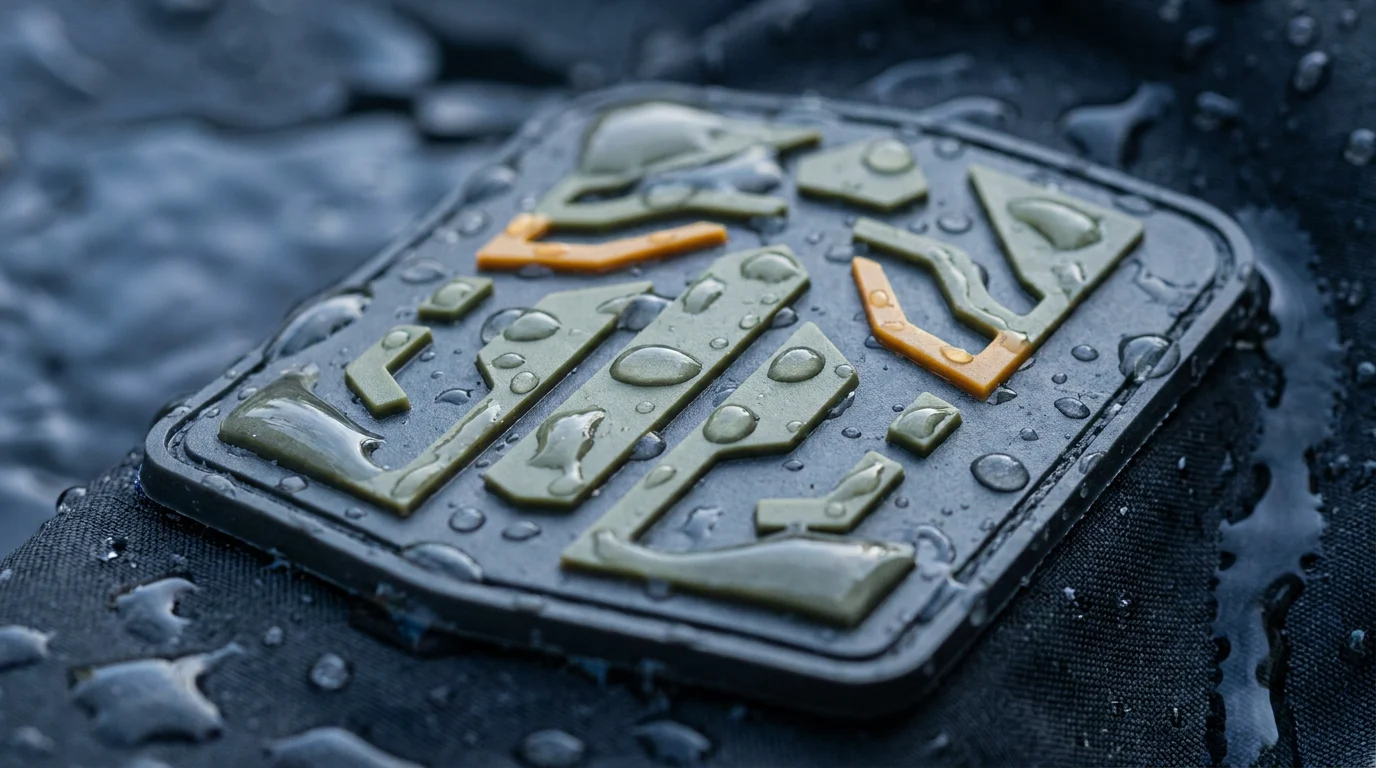
PVC patches win in the UK because the material properties match the demands of outdoor and safety-critical work. Solid polyvinyl chloride absorbs no moisture, so a PVC patch stays waterproof where an embroidered patch soaks and frays. Pigment runs through the full depth of the rubber, so the colour resists the sunlight and laundry cycles that fade printed transfers. Each measurable attribute maps to a specific sector need.
| Attribute | Why it matters | Sectors that rely on it |
|---|---|---|
| Waterproof | Sheds rain and immersion without absorbing water | Marine, sailing, outdoor, emergency services |
| UV-stable | Holds colour under prolonged British sunlight | Motorcycle clubs, outdoor gear, workwear |
| Colour-fast | Pigment sits inside the material, not on the surface | Streetwear brands, corporate uniforms |
| Removable (velcro) | Lets wearers swap role markers between kit | Military, security, airsoft |
| Machine washable | Survives repeated laundering at 40°C | Workwear, sports clubs, schools |
| Pantone-matched | Reproduces brand colour on every reorder | Corporate branding, merchandise |
| Non-fraying edge | Die-cut border seals during moulding | Motorcycle clubs, custom-shaped crests |
Durability translates directly into cost per wear, which is why safety-critical and outdoor sectors adopted moulded rubber first. The right attribute only reaches the garment through the right backing, so the next question is which sector uses which build.
Six sector families
PVC Patch Applications Across UK Sectors
PVC patches serve six broad sector families in the UK. Application drives specification, so size, relief and backing change with the environment the patch works in.
Military, Cadet and Tactical Units
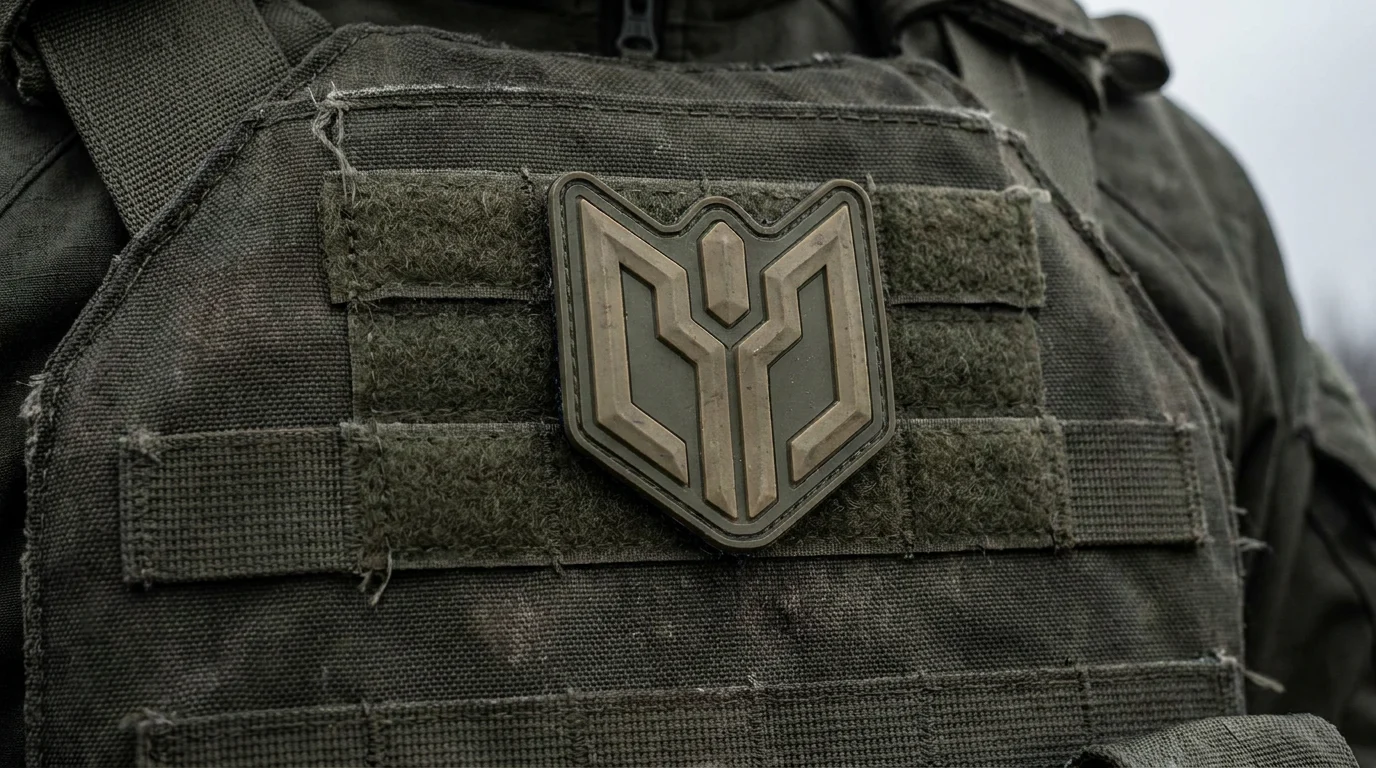
British forces personnel, cadet detachments and airsoft teams use PVC morale patches on plate carriers, smocks and bergens. Hook-and-loop backing suits this sector because operational roles change between deployments, so wearers reposition patches without tools. Subdued colourways, IR-compatible finishes and glow-in-the-dark variants are standard requests, and BFPO addresses are accepted on delivery. Explore military and cadet PVC patches and airsoft and morale patches for sector-specific builds.
Workwear, Security and Emergency Services
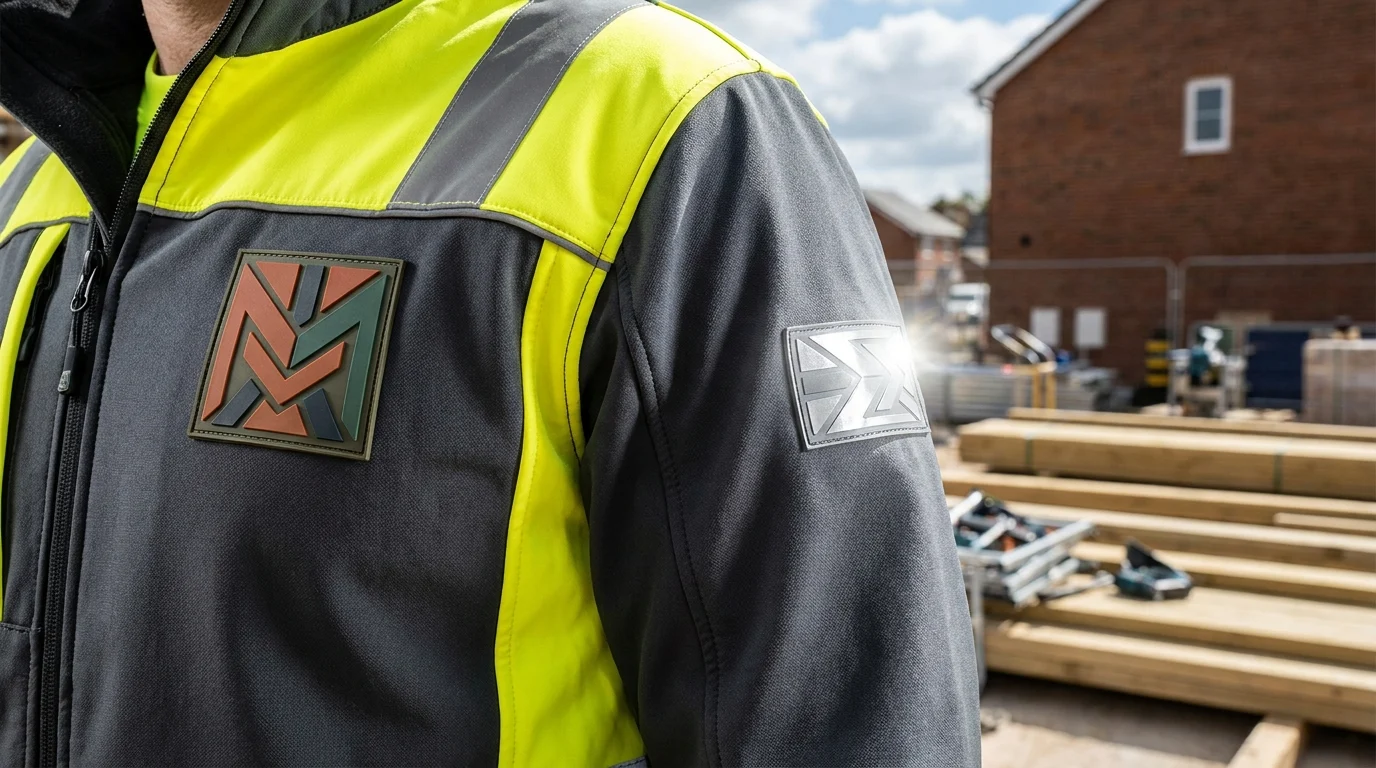
Facilities firms, engineering contractors, security teams and emergency responders apply custom PVC patches to polo shirts, softshells and hi-vis jackets. Sew-on backing withstands industrial laundry cycles that destroy printed transfers within weeks, so the branding stays intact for the life of the garment. Reflective PVC patches add high-visibility identification for night work, and Pantone matching keeps a logo consistent across a fleet. See workwear and uniform patches, and emergency services patches.
Clubs, Schools and Community Groups
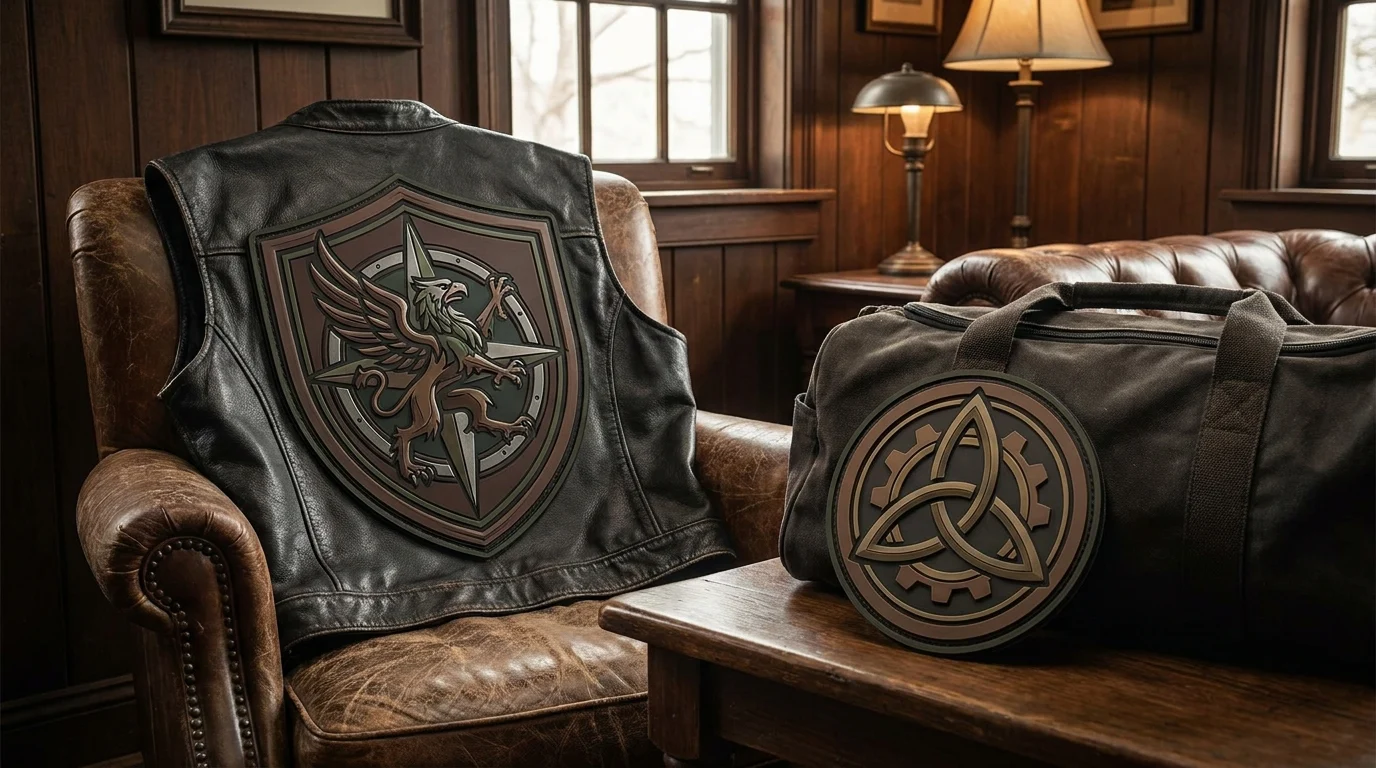
Motorcycle clubs, sports clubs, scout groups, schools and charities order PVC patches for jackets, kit bags and uniforms. Rubber construction resists the rain, road grime and wind abrasion that degrade embroidered thread over long distances, so a biker back patch survives seasons of riding. Large die-cut shapes up to 200mm reproduce club insignia without a fraying stitched border, while smaller crests suit team kit and school blazers. There is no minimum order, so small groups order the exact quantity they need. Browse motorcycle club patches, sports club patches.
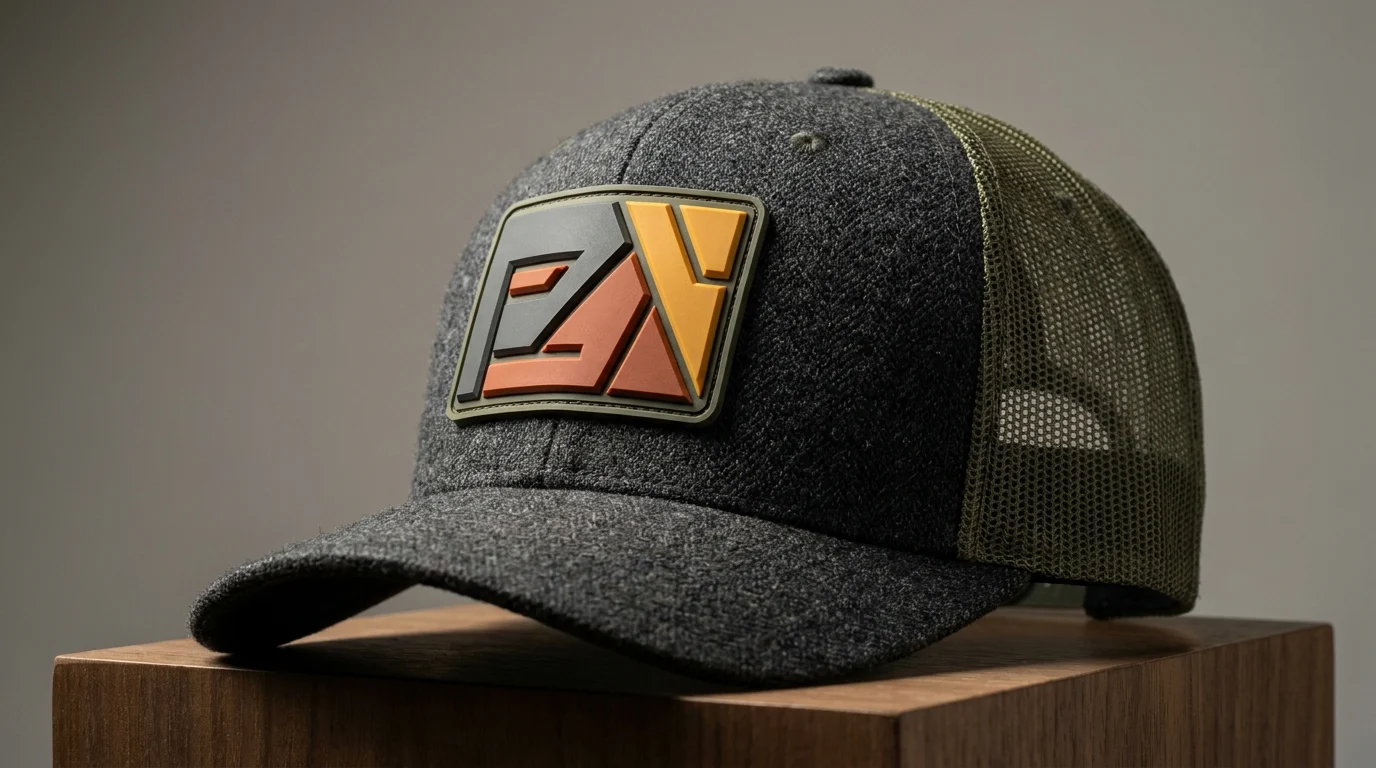
Streetwear, Headwear and Events
Streetwear labels, headwear brands and event organisers mount PVC patches on trucker caps, beanies, hoodies and festival merchandise. Rubber relief gives a raised, tactile front panel that reads as premium at retail, so the badge lifts the perceived value of the garment. Smaller sizes between 40mm and 70mm suit cap fronts, and 3D relief holds detail at that scale better than embroidery. See, hat and cap patches.
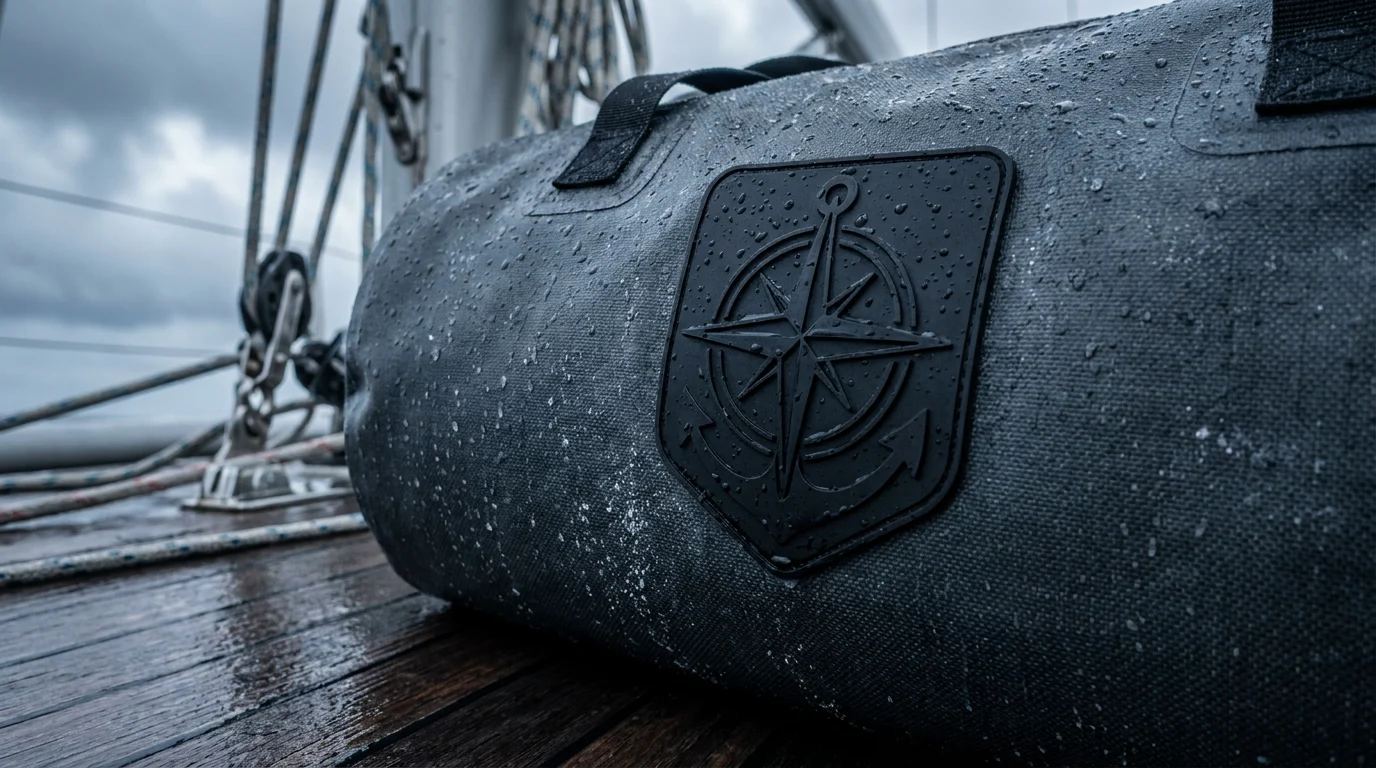
Outdoor, Marine and Travel Gear
Sailing teams, climbing groups, cyclists and outdoor brands fit PVC patches to dry bags, technical shells and kit bags. Waterproofing matters most here, because the substrate itself is often waterproof and a stitched patch would pierce and compromise a membrane fabric. Adhesive and velcro backings attach the badge without a needle hole, so the gear keeps its seal. Explore bags and outdoor gear patches.
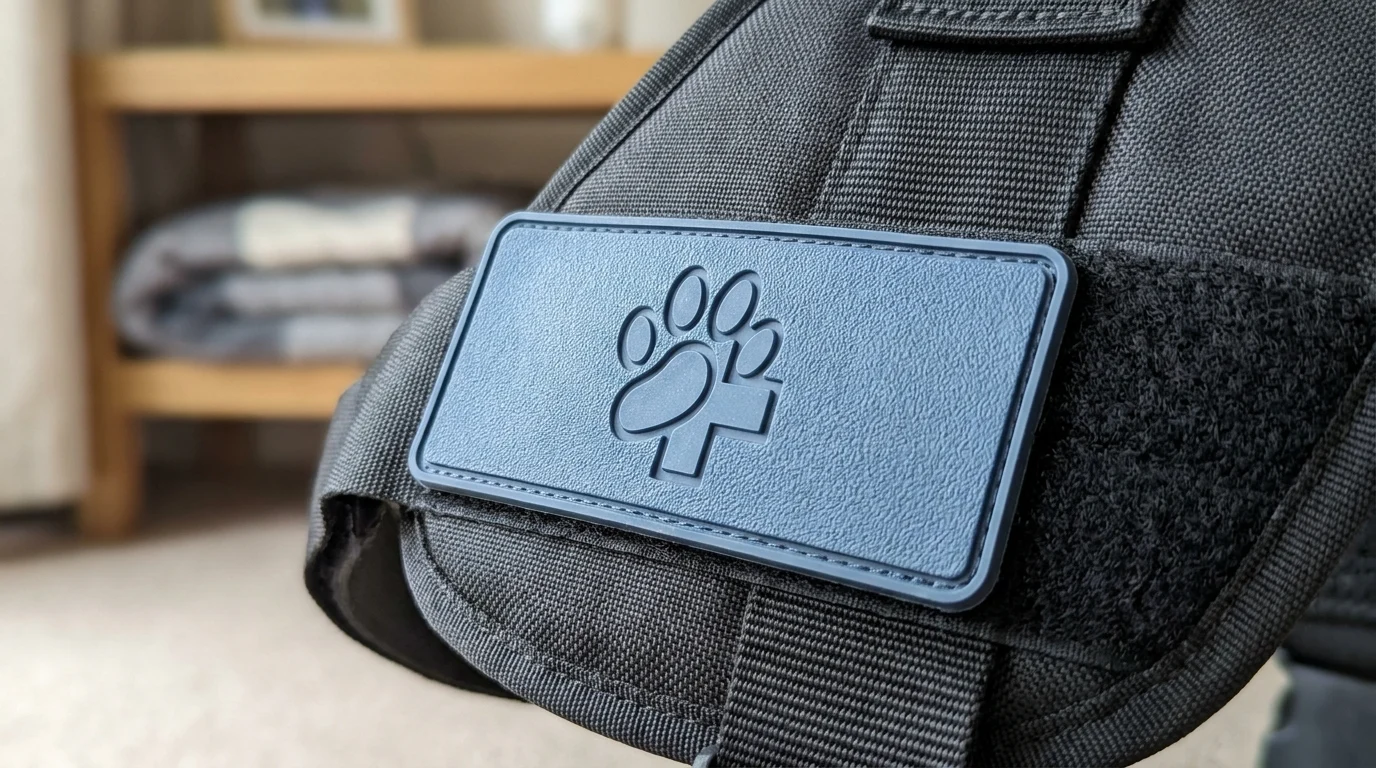
Assistance Dogs and Service Identification
Assistance dog owners and working-dog organisations use PVC identification patches on harnesses, vests and leads. A wipe-clean rubber surface stays hygienic and legible where an embroidered patch would trap dirt and moisture, so the ID marker remains clear in public. Hook-and-loop backing lets handlers move a patch between harnesses.
Specification by environment
How Application Affects PVC Patch Specification
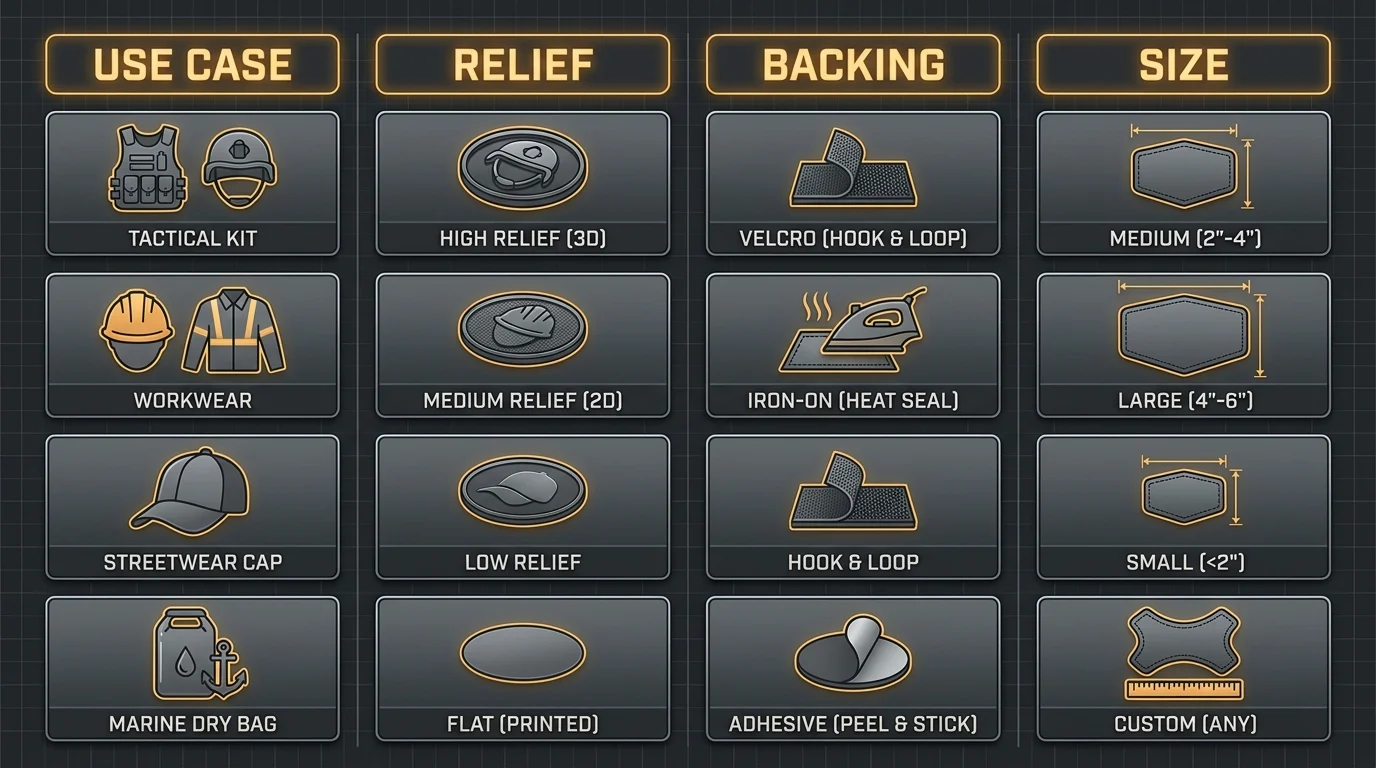
The application sets the specification. A PVC patch has four variables — relief, backing, size and finish — and each sector combines them differently. The table below maps common UK use cases to the build that suits them.
| Use case | Recommended relief | Recommended backing | Typical size |
|---|---|---|---|
| Tactical morale patch | 2D or 3D | Hook-and-loop (velcro) | 75–90mm |
| Workwear chest logo | 2D | Sew-on | 60–90mm |
| Motorcycle back patch | 2D or 3D | Sew-on | up to 200mm |
| Streetwear cap front | 3D | Velcro or sew-on | 40–70mm |
| Helmet or hard case | 2D | 3M adhesive | 40–80mm |
| Sailing or dry-bag badge | 2D or 3D | Adhesive or velcro | 60–100mm |
Backing choice matters most, because it decides whether the patch is permanent or removable. Choose hook-and-loop backing for interchangeable kit, sew-on backing for laundered uniforms, and 3M adhesive backing for hard surfaces. Relief affects how the design reads: compare 2D PVC patches for flat logos and text against 3D PVC patches for sculpted crests and faces.
Material choice
PVC Patches vs Embroidered Patches for UK Applications
PVC patches and embroidered patches suit different sectors. PVC wins wherever water, sunlight and abrasion shorten the life of thread, while embroidered patches keep the traditional finish that formal uniform and club blazers expect. The comparison below shows the better choice by sector.
| Sector | Better choice | Reason |
|---|---|---|
| Military and tactical | PVC | Waterproof, velcro-ready, subdued and IR finishes |
| Outdoor and marine | PVC | Seals against water; no needle hole in membrane fabric |
| Streetwear and caps | PVC | Raised 3D relief holds detail at small scale |
| Workwear uniforms | PVC | Survives industrial laundering without fraying |
| Formal club blazers | Embroidered | Thread texture carries the expected traditional finish |
| Fine detailed labels | Woven or embroidered | Flat thread reproduces very small typography |
For a full material breakdown, read PVC patches vs embroidered patches. The distinction explains why PVC dominates military, marine and construction work while embroidery holds ceremonial and heritage uses.
From brief to delivery
How to Order PVC Patches for Your Sector
Ordering PVC patches follows five steps from enquiry to delivery.
- Send your artwork — upload a vector file, JPEG or sketch with your target size, quantity and sector.
- Receive a quotation — pricing covers moulding, production, backing and UK delivery, quoted in pounds sterling excluding VAT at 20%.
- Approve the digital proof — check colours against Pantone references and confirm dimensions before any tooling begins.
- Production begins — mould engraving, PVC pouring, curing and backing application.
- Delivery — tracked despatch to a UK address, with BFPO accepted for serving personnel.
There is no minimum order, so you order the exact quantity your sector needs. Standard production takes 10–14 working days from proof approval, and express production takes 5–7 working days from proof approval. UK mainland delivery adds 1–2 working days. To start, request a quotation or read the full ordering process.
In their words
Stories About Us and Our Customers
PVC patches end up on kit that works for a living. These are the orders behind them, the brief, the mould, and what the patch had to survive.
Tactical · Hook-and-loop
“The patches arrived clean, sharp and ready to go straight onto our kit bags.”
The hook-and-loop backing made it easy for the team to swap patches between packs, jackets and plate carriers without losing the raised detail in the badge.
Sarah Mitchell · Manchester
Workwear · Sew-on
“The PVC badges made our workwear look much more professional than printed logos.”
The sew-on finish gave the uniforms a permanent patch that could handle daily wear, wet weather and repeated cleaning.
James Carter · Birmingham
Streetwear · 3D relief
“The 3D finish gave our caps the premium detail we wanted.”
The raised rubber face helped the logo stand out on the front panel while keeping the colours consistent across the run.
Amelia Thompson · London
Outdoor · Waterproof
“The patches held up well on wet kit and still looked fresh after a muddy weekend.”
Waterproof PVC was chosen for bags and jackets where stitched thread would have absorbed moisture and frayed at the edge.
Oliver Hughes · Bristol
Club · Custom shape
“Our badge shape was unusual, but the final patch followed it neatly.”
The custom die-cut outline kept the club crest recognisable while the moulded edge avoided the bulky border of an embroidered patch.
Priya Shah · Leeds
Security · Velcro
“Being able to remove and replace patches between shifts has been really useful.”
Hook-and-loop backing was selected for staff jackets so roles and identifiers could be changed quickly without replacing garments.
Daniel Evans · Cardiff
Merchandise · Colour match
“The colours matched our brand better than the woven sample we tried before.”
Pantone-matched PVC helped keep the logo consistent for merchandise, reorder stock and event giveaways.
Hannah Wilson · Nottingham
Motorcycle · Jacket patch
“The rubber patch gave the jacket a cleaner, tougher finish.”
The club needed a weather-resistant badge that could handle rain, road grime and regular outdoor use.
Mark Robinson · Newcastle
Sports · Team kit
“The patch worked well on kit bags and training jackets.”
A flexible PVC build kept the team crest visible without adding a heavy stitched border to lightweight gear.
Rebecca Green · Sheffield
Repeat order · Reorder
“Reordering was simple because the mould was already set up.”
The second run kept the same dimensions, relief and colour references as the original patch order.
Thomas Baker · Glasgow
Questions answered
Frequently Asked Questions
Are PVC patches suitable for military use?
Yes. PVC morale patches suit military and cadet use because hook-and-loop backing lets wearers reposition them, and subdued, IR-compatible and glow-in-the-dark finishes are available. BFPO delivery is accepted for serving personnel.
Can PVC patches be used on waterproof jackets?
Yes. Solid PVC absorbs no water, and velcro or adhesive backing attaches the patch without piercing a waterproof membrane, so the jacket keeps its seal.
Are PVC patches good for workwear uniforms?
Yes. Sew-on PVC patches survive industrial laundering that lifts printed transfers, and Pantone matching keeps the logo consistent across every garment in a fleet.
Can schools and clubs order PVC patches?
Yes. Schools, universities, sports clubs and youth groups order PVC patches with no minimum order, so small batches are viable and affordable.
Do PVC patches work on caps and beanies?
Yes. Smaller 40–70mm patches suit cap fronts, and 3D relief holds fine detail at that scale better than embroidery.
Is there a minimum order for sector patches?
No. There is no minimum order — you order exactly the quantity your sector needs, whether that is a small batch or a full production run.
Choose by application
Summary — Choosing PVC Patches for Your UK Application
The sector decides the build. British forces and airsoft teams reach for velcro-backed morale patches, workwear and emergency crews need sew-on badges that survive the wash, and streetwear labels choose 3D relief for a premium cap front. Outdoor and marine users value the waterproof seal, while assistance-dog handlers need a wipe-clean ID that stays legible. Across all of them, moulded polyvinyl chloride holds colour and shape where thread and print give way. Match your application to the right relief, backing and size, send your artwork, and a UK manufacturer returns a digital proof before anything is cut.