PVC Patches vs Other Patch Types: The UK Comparison Guide
In short: PVC patches are moulded rubber badges that outperform embroidered, woven, printed, silicone, leather and chenille patches on waterproofing, weather resistance and colour retention. Embroidered and chenille patches win on texture, woven patches win on fine detail, and leather patches signal premium. PVC patches lead wherever kit meets rain, sunlight or abrasion.
Custom patches divide into seven main types, and each type serves a different purpose. PVC patches, embroidered patches, woven patches, printed patches, silicone patches, leather patches and chenille patches differ in material, detail capacity, weather performance and cost. This guide measures PVC patches against every alternative, so you can match the right patch type to your garment, gear or brand before you order. Each comparison links to a dedicated breakdown for buyers who need the full detail.
Featured Client
What Are PVC Patches?
PVC patches are flexible rubber badges moulded from plasticised polyvinyl chloride, produced in 2D or 3D relief at a finished thickness of 2.5mm to 3.5mm. Polyvinyl chloride sets the baseline that every other patch type is measured against, because the material behaves unlike thread, ink or leather. Pigment runs through the full depth of the patch rather than sitting on the surface, so the colour does not fade, peel or crack. The die-cut edge seals during moulding, so the border never frays.
These three properties — full-depth colour, a sealed die-cut edge and a waterproof rubber body — decide almost every comparison below. Manufacturers list the same product as PVC patches, rubber patches and morale patches, but the material stays constant in each case. For the full moulding process, see how PVC patches are made.

PVC Patches Compared to Every Other Patch Type
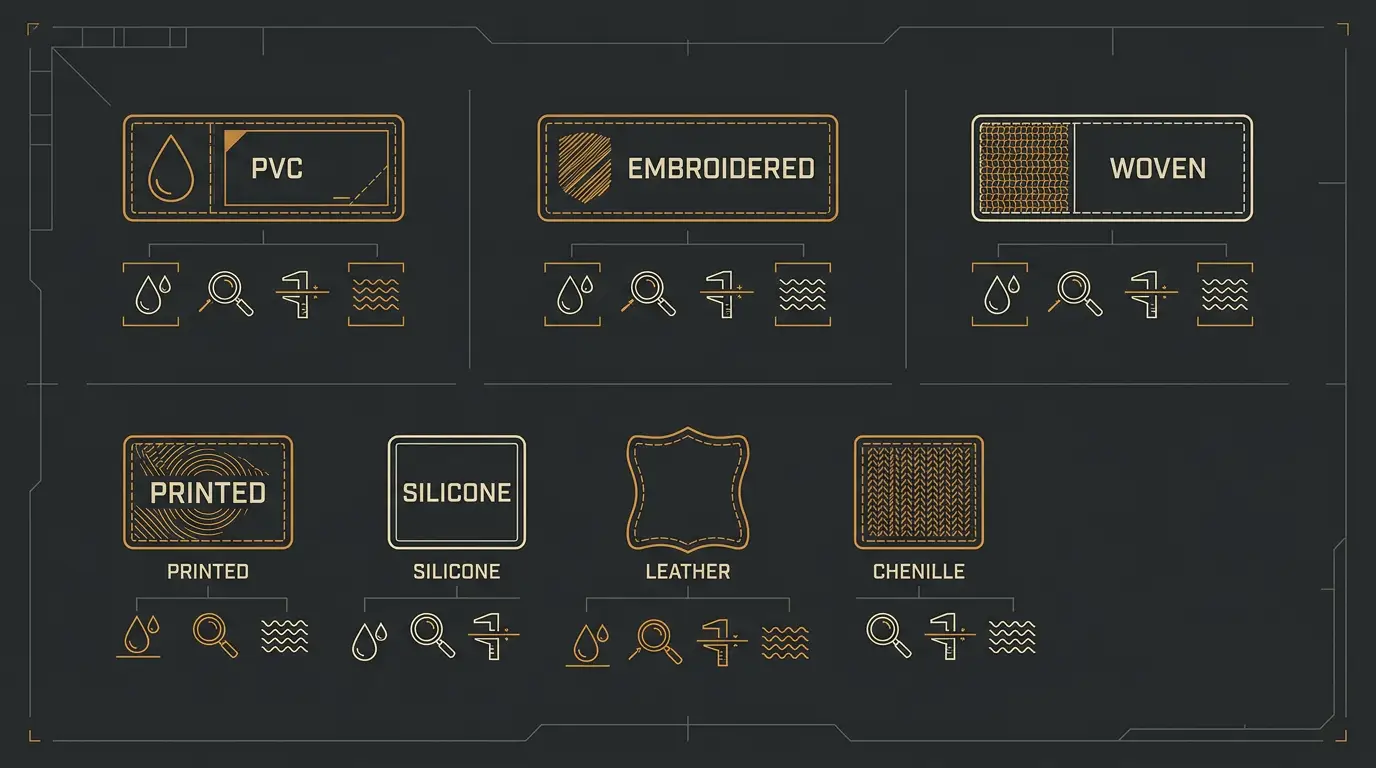
PVC patches compete with six other patch types across nine measurable attributes. The table below scores each type on the attributes that decide a purchase: material, detail, thickness, waterproofing, weather resistance, colour system, edge finish, iron-on availability and texture.
| Attribute | PVC | Embroidered | Woven | Printed | Silicone | Leather | Chenille |
|---|---|---|---|---|---|---|---|
| Material | Polyvinyl chloride | Polyester thread on twill | Fine woven thread | Ink on fabric | Silicone rubber | Genuine/faux leather | Yarn loops on twill |
| Detail level | High (moulded relief) | Low–medium | Very high (flat) | Very high (photographic) | Medium | Low | Low (textured) |
| Thickness | 2.5–3.5mm | 1.5–2mm | ~1mm | ~1mm | 1.5–3mm | 2–4mm | 3–5mm |
| Waterproof | Yes | No | No | Partial | Yes | No | No |
| Weather resistance | Excellent | Poor | Poor | Fair | Excellent | Fair | Poor |
| Colour system | Pantone, full depth | Thread chart | Thread chart | CMYK, full colour | Pantone | Dye/emboss | Yarn chart |
| Edge finish | Die-cut, sealed | Merrow border | Laser-cut | Laser-cut | Die-cut | Cut/stitched | Merrow border |
| Iron-on option | No | Yes | Yes | Yes | No | No | Yes |
| Texture | Smooth rubber relief | Raised thread | Flat, fine | Flat, smooth | Soft matte | Embossed grain | Raised fuzzy pile |
| Best use | Outdoor, tactical, workwear | Uniforms, blazers | Labels, fine logos | Events, promo | Apparel, soft-touch | Bags, jeans, premium | Varsity, sports, schools |
One pattern runs through every row. PVC patches win where water, sunlight and abrasion shorten the life of thread or ink, and the alternatives win where texture, fine detail or a premium material carries more weight than durability.
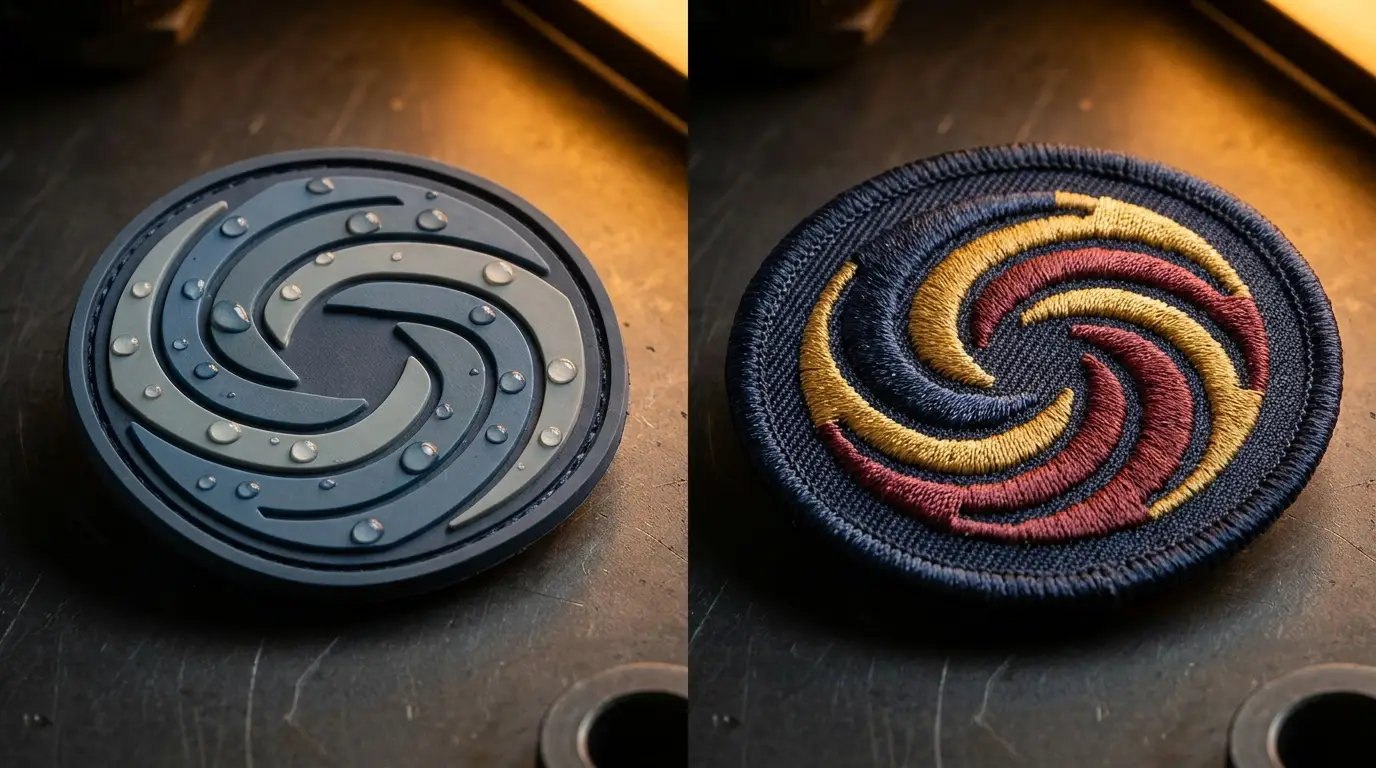
PVC vs Embroidered Patches
PVC patches are waterproof and colour-fast; embroidered patches carry stitched thread texture but absorb water and can fray. Embroidered patches build their design from polyester thread stitched onto a twill base, then finish with a merrow border. PVC patches replace that thread with moulded rubber, so rain, immersion and machine washing leave the patch unchanged. Unlike embroidered thread, plasticised PVC seals its own edge and holds Pantone colour through the full depth of the badge.
When to choose PVC over embroidered
Embroidered patches keep two advantages: they accept iron-on backing, and their thread texture suits formal uniform and club blazers. PVC patches win everywhere thread wears down — outdoor gear, tactical kit and industrial workwear. See the full breakdown in PVC vs embroidered patches.
PVC vs Woven Patches
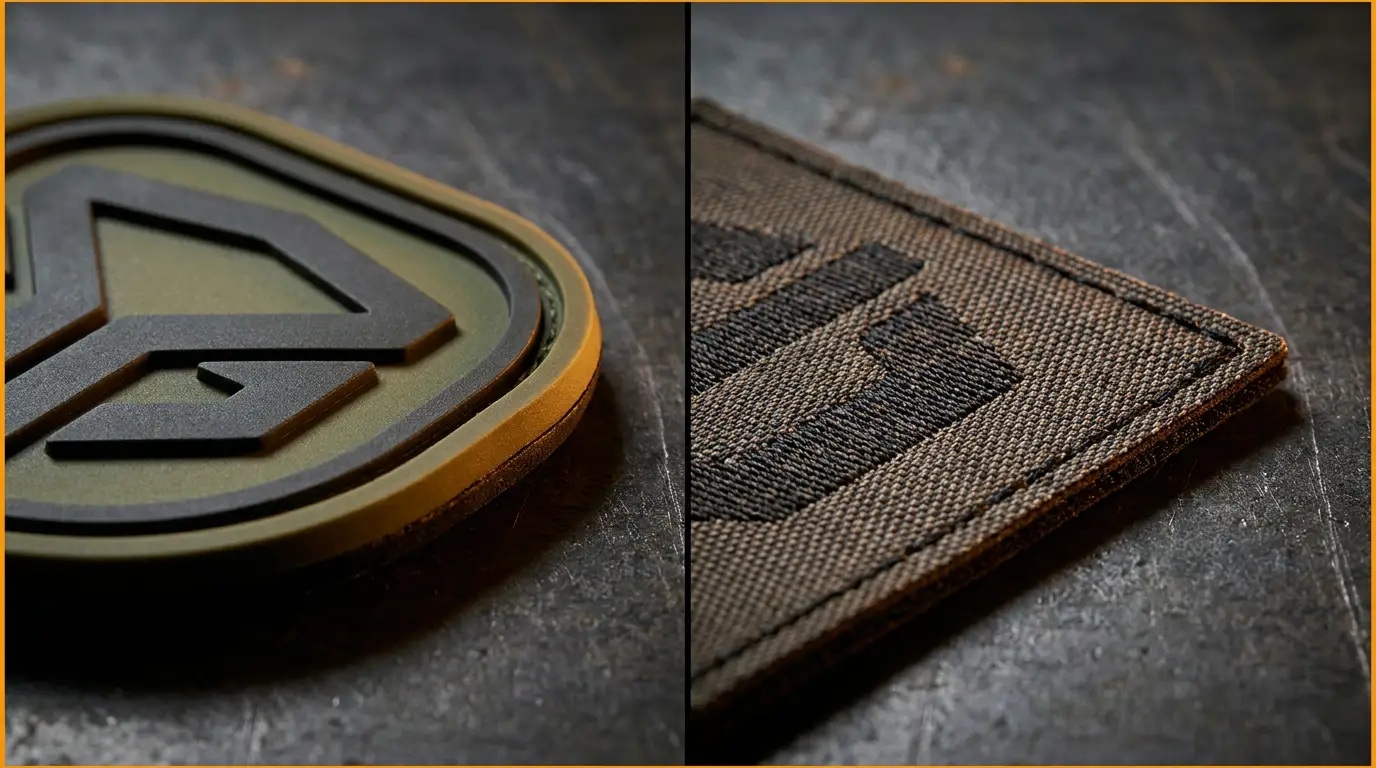
Woven patches reproduce finer text than PVC patches; PVC patches deliver depth, relief and waterproofing that flat weave cannot. Woven patches use thin woven thread and a laser-cut edge, which holds small typography and tight detail at roughly 1mm thickness. PVC patches trade that flatness for moulded 2D and 3D relief, a sealed die-cut border and a fully waterproof body.
When to choose PVC over woven
Woven patches suit small labels and logos where fine lines and thin profile matter most. PVC patches suit gear that lives outdoors, where relief and weather resistance outrank flat detail. Read the full comparison in PVC vs woven patches.
PVC vs Printed Patches
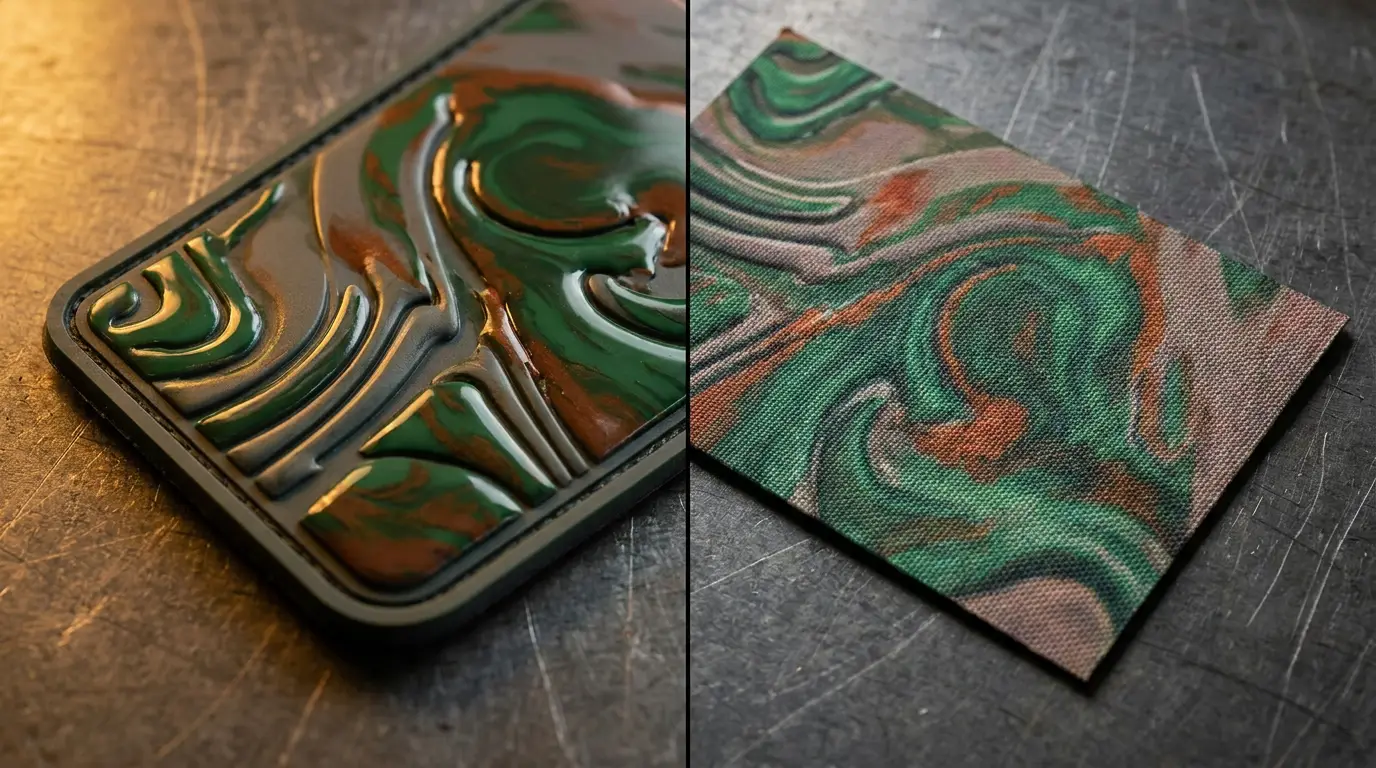
Printed patches carry full-colour photographic artwork; PVC patches carry moulded relief with pigment sealed through the full depth. Printed patches apply CMYK ink to a fabric base, which reproduces gradients and photographs at low cost. PVC patches mix colour into the rubber itself, so the design gains dimension and never cracks, peels or fades the way surface ink does.
When to choose PVC over printed
Printed patches win on photographic gradients and on cost for highly complex colour. PVC patches win on longevity, because sealed pigment survives sunlight and laundry that lift printed transfers within weeks. See PVC vs printed patches for the detail.
PVC vs Silicone Patches
PVC patches and silicone patches are the two waterproof rubber options; silicone is softer and stretchier, while PVC holds sharper moulded detail at a lower cost. Silicone rubber flexes and stretches without losing shape, which suits garments that move. PVC patches stay more rigid, hold crisp edges and reproduce fine relief more reliably, and they cost less to manufacture at the same size.
When to choose PVC over silicone
Silicone patches suit soft-touch apparel and items that stretch. PVC patches suit tactical gear, packs and workwear where sharp detail and value matter more than flexibility. Compare both in PVC vs silicone patches.
PVC vs Leather Patches
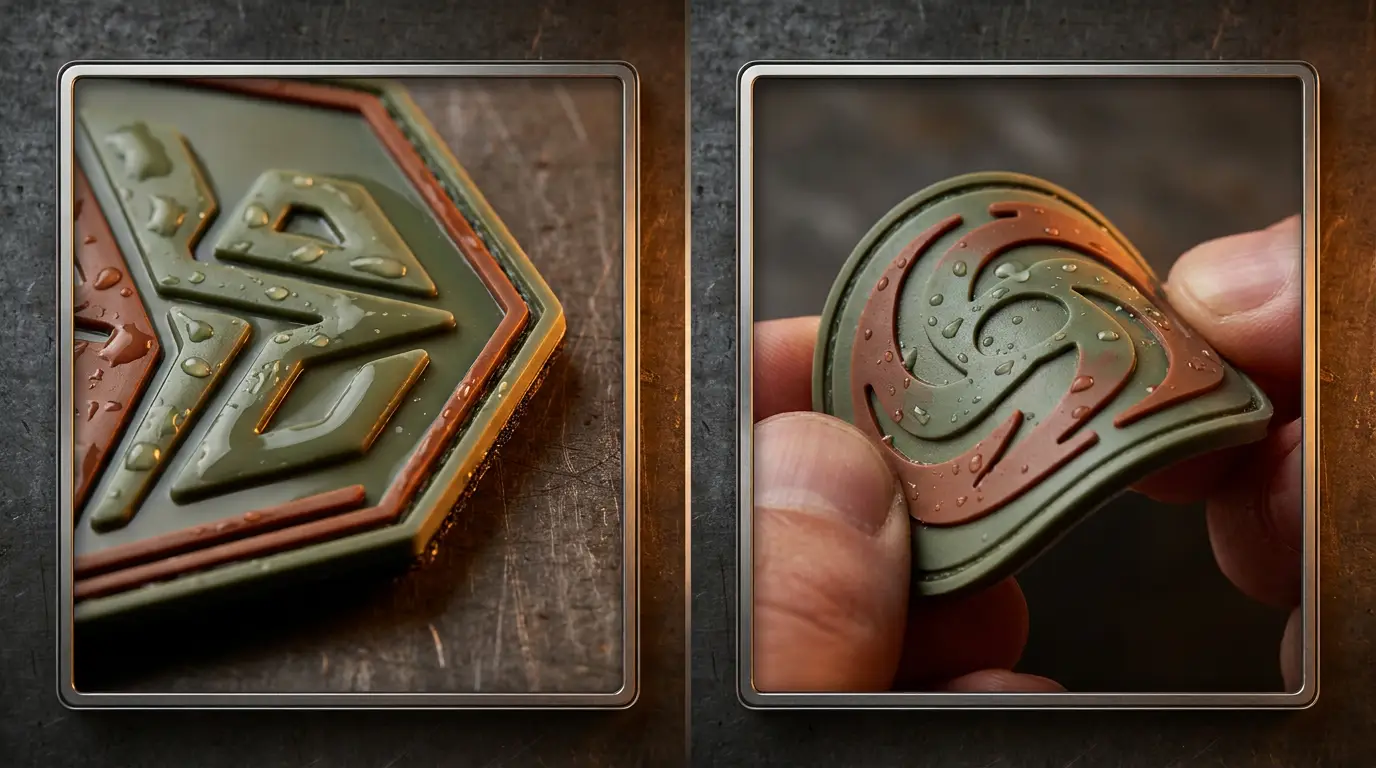
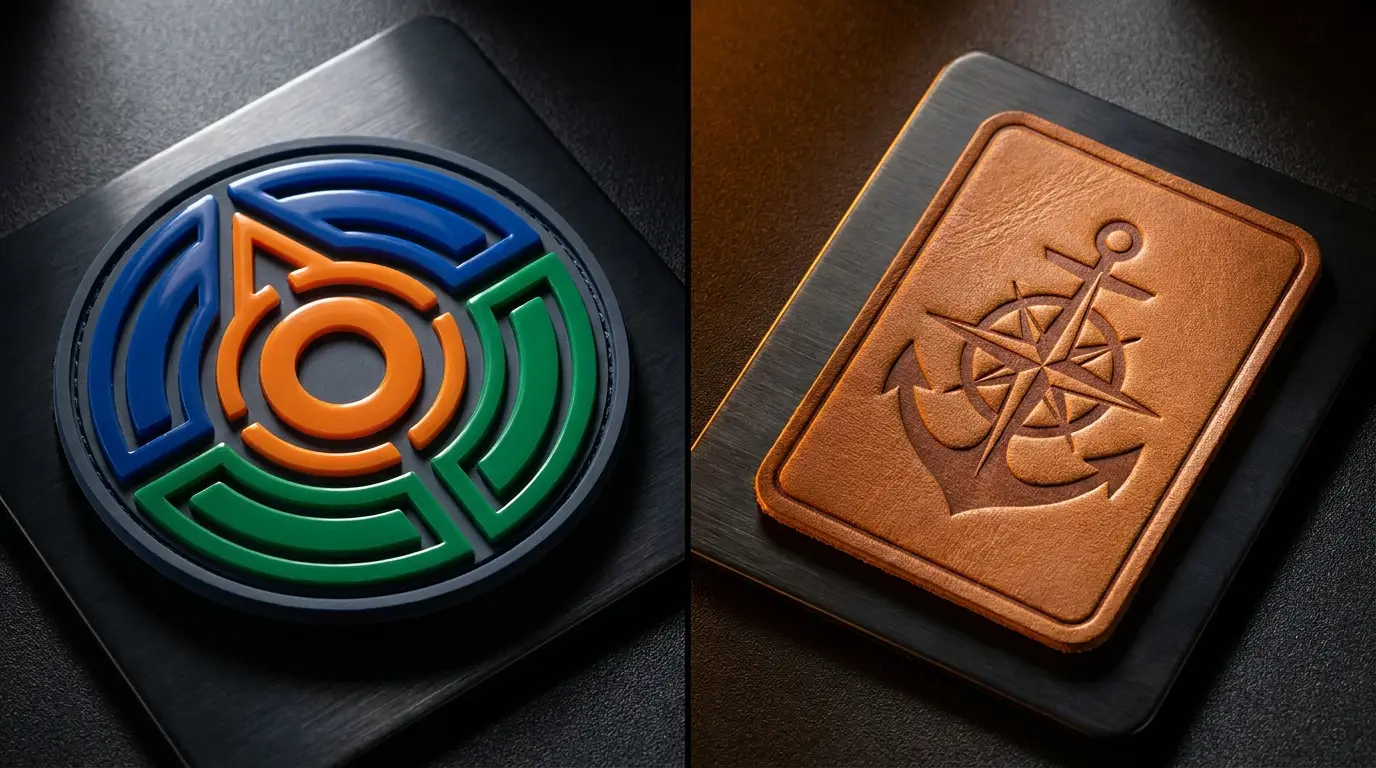
Leather patches signal premium heritage on bags and denim; PVC patches outperform leather on waterproofing, colour range and cost. Leather patches emboss or deboss a design into genuine or faux leather, which reads as a premium retail cue. PVC patches reproduce any Pantone colour, resist water completely and cost less per unit, but they trade the natural grain that gives leather its prestige.
When to choose PVC over leather
Leather patches suit premium fashion, denim and canvas bags where the material itself is the message. PVC patches suit outdoor brands and technical gear that need colour, waterproofing and value. Read PVC vs leather patches for the full picture.
PVC vs Chenille Patches
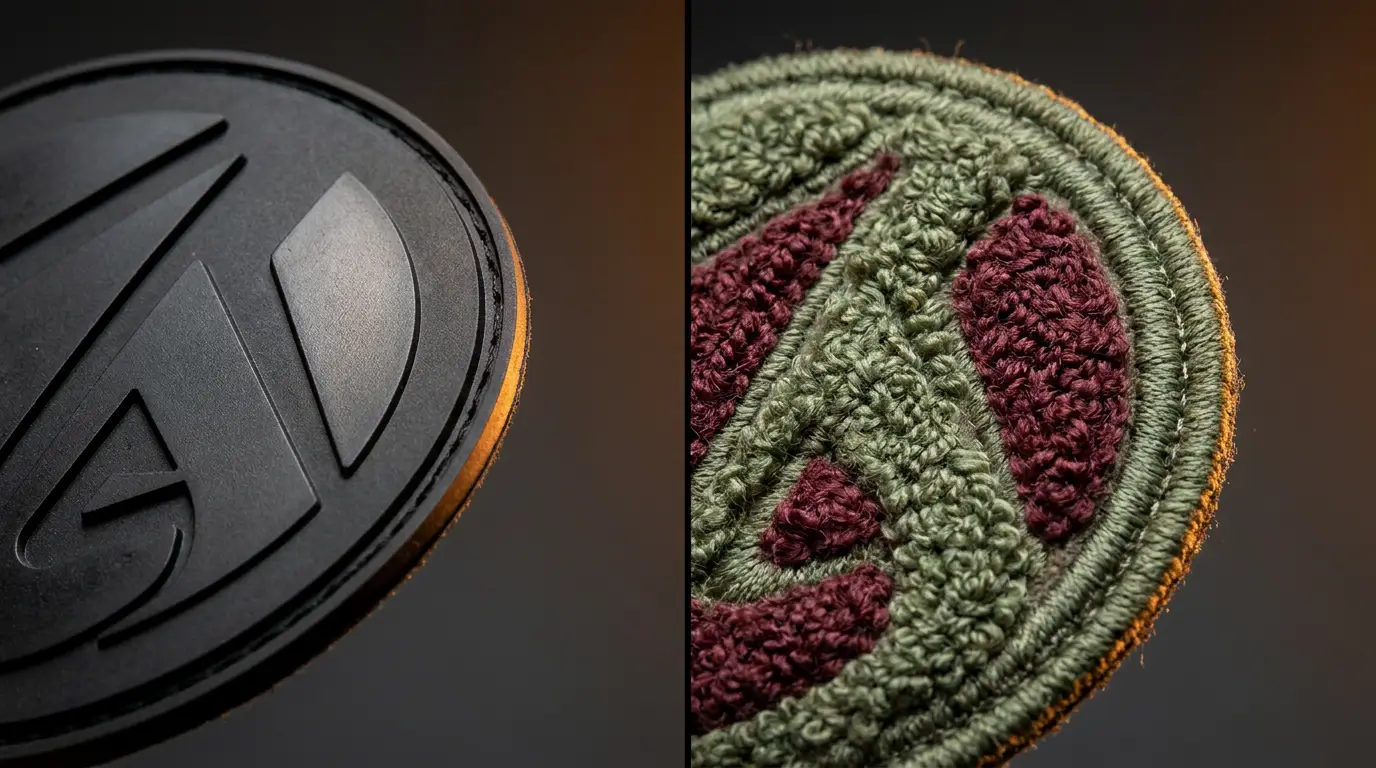
Chenille patches give a raised, fuzzy varsity texture; PVC patches give a sealed, weatherproof surface that survives outdoor use chenille cannot. Chenille patches build a soft yarn-loop pile on a twill base with a merrow border, which delivers the classic letterman aesthetic. PVC patches replace that pile with smooth moulded rubber, so the badge stays waterproof, colour-fast and abrasion-resistant.
When to choose PVC over chenille
Chenille patches suit varsity jackets, sports letters and school badges where soft texture defines the look. PVC patches suit gear that faces weather and wear. Compare the two in PVC vs chenille patches.
How to Choose the Right Patch Type for Your Kit
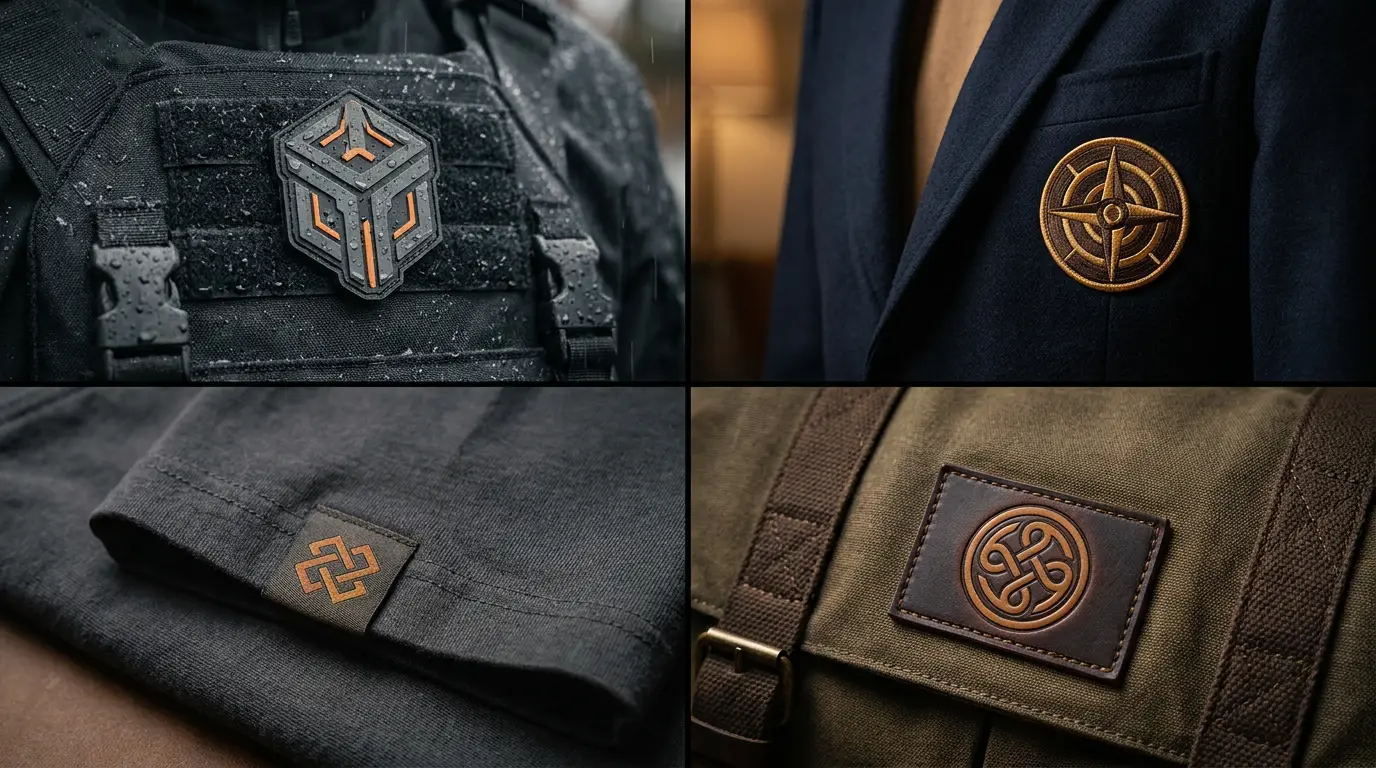
Patch selection follows the environment the patch works in, not the material alone. Four use cases cover most orders, and each one points to a clear winner.
- Best for outdoor and tactical gear — PVC. Waterproof rubber, excellent weather resistance and hook-and-loop compatibility make PVC the standard for plate carriers, packs and hi-vis workwear.
- Best for formal uniform and club blazers — Embroidered. Stitched thread texture carries the traditional finish that ceremonial and corporate uniform expects.
- Best for fine text and small logos — Woven. Flat woven thread holds small typography and thin lines that moulded relief cannot reproduce at scale.
- Best for premium fashion and branding — Leather. Natural grain and embossed relief signal a premium product at retail.
Where your patch faces rain, sunlight, road grime or repeated laundering, PVC patches deliver the lowest cost per wear, which is why UK military units, contractors and outdoor clubs adopted the format first.
Ordering Custom PVC Patches in the UK
Custom PVC patches ship from a UK manufacturer with no minimum order quantity. You supply artwork, approve a digital proof, and receive a bespoke patch with velcro, sew-on, adhesive or plain backing. Pantone colour matching applies to every order, and prices are quoted in pounds sterling with VAT stated plainly.
Send your design to request a quote, or read the full ordering process before you start.
In their words
Stories About Us and Our Customers
PVC patches end up on kit that works for a living. These are the orders behind them, the brief, the mould, and what the patch had to survive.
Tactical · Hook-and-loop
“The patches arrived clean, sharp and ready to go straight onto our kit bags.”
The hook-and-loop backing made it easy for the team to swap patches between packs, jackets and plate carriers without losing the raised detail in the badge.
Sarah Mitchell · Manchester
Workwear · Sew-on
“The PVC badges made our workwear look much more professional than printed logos.”
The sew-on finish gave the uniforms a permanent patch that could handle daily wear, wet weather and repeated cleaning.
James Carter · Birmingham
Streetwear · 3D relief
“The 3D finish gave our caps the premium detail we wanted.”
The raised rubber face helped the logo stand out on the front panel while keeping the colours consistent across the run.
Amelia Thompson · London
Outdoor · Waterproof
“The patches held up well on wet kit and still looked fresh after a muddy weekend.”
Waterproof PVC was chosen for bags and jackets where stitched thread would have absorbed moisture and frayed at the edge.
Oliver Hughes · Bristol
Club · Custom shape
“Our badge shape was unusual, but the final patch followed it neatly.”
The custom die-cut outline kept the club crest recognisable while the moulded edge avoided the bulky border of an embroidered patch.
Priya Shah · Leeds
Security · Velcro
“Being able to remove and replace patches between shifts has been really useful.”
Hook-and-loop backing was selected for staff jackets so roles and identifiers could be changed quickly without replacing garments.
Daniel Evans · Cardiff
Merchandise · Colour match
“The colours matched our brand better than the woven sample we tried before.”
Pantone-matched PVC helped keep the logo consistent for merchandise, reorder stock and event giveaways.
Hannah Wilson · Nottingham
Motorcycle · Jacket patch
“The rubber patch gave the jacket a cleaner, tougher finish.”
The club needed a weather-resistant badge that could handle rain, road grime and regular outdoor use.
Mark Robinson · Newcastle
Sports · Team kit
“The patch worked well on kit bags and training jackets.”
A flexible PVC build kept the team crest visible without adding a heavy stitched border to lightweight gear.
Rebecca Green · Sheffield
Repeat order · Reorder
“Reordering was simple because the mould was already set up.”
The second run kept the same dimensions, relief and colour references as the original patch order.
Thomas Baker · Glasgow
Tactical · Hook-and-loop
“The patches arrived clean, sharp and ready to go straight onto our kit bags.”
The hook-and-loop backing made it easy for the team to swap patches between packs, jackets and plate carriers without losing the raised detail in the badge.
Sarah Mitchell · Manchester
Workwear · Sew-on
“The PVC badges made our workwear look much more professional than printed logos.”
The sew-on finish gave the uniforms a permanent patch that could handle daily wear, wet weather and repeated cleaning.
James Carter · Birmingham
Streetwear · 3D relief
“The 3D finish gave our caps the premium detail we wanted.”
The raised rubber face helped the logo stand out on the front panel while keeping the colours consistent across the run.
Amelia Thompson · London
Outdoor · Waterproof
“The patches held up well on wet kit and still looked fresh after a muddy weekend.”
Waterproof PVC was chosen for bags and jackets where stitched thread would have absorbed moisture and frayed at the edge.
Oliver Hughes · Bristol
Club · Custom shape
“Our badge shape was unusual, but the final patch followed it neatly.”
The custom die-cut outline kept the club crest recognisable while the moulded edge avoided the bulky border of an embroidered patch.
Priya Shah · Leeds
Security · Velcro
“Being able to remove and replace patches between shifts has been really useful.”
Hook-and-loop backing was selected for staff jackets so roles and identifiers could be changed quickly without replacing garments.
Daniel Evans · Cardiff
Merchandise · Colour match
“The colours matched our brand better than the woven sample we tried before.”
Pantone-matched PVC helped keep the logo consistent for merchandise, reorder stock and event giveaways.
Hannah Wilson · Nottingham
Motorcycle · Jacket patch
“The rubber patch gave the jacket a cleaner, tougher finish.”
The club needed a weather-resistant badge that could handle rain, road grime and regular outdoor use.
Mark Robinson · Newcastle
Sports · Team kit
“The patch worked well on kit bags and training jackets.”
A flexible PVC build kept the team crest visible without adding a heavy stitched border to lightweight gear.
Rebecca Green · Sheffield
Repeat order · Reorder
“Reordering was simple because the mould was already set up.”
The second run kept the same dimensions, relief and colour references as the original patch order.
Thomas Baker · Glasgow
PVC Patches vs Other Patch Types — Frequently Asked Questions
Are PVC patches better than embroidered patches?
Not universally. PVC patches win outdoors on waterproofing and durability, while embroidered patches win on thread texture and formal uniform.
What is the difference between PVC and silicone patches?
Both are waterproof rubber. Silicone is softer and stretchier, while PVC holds sharper moulded detail and costs less to produce.
Which patch type is the most durable outdoors?
PVC. Solid polyvinyl chloride absorbs no water and carries no stitched edge to fray, so rain, sunlight and abrasion leave it unchanged.
Which patch type holds the finest detail?
Woven. Fine woven thread reproduces small text and thin lines that moulded relief and embroidery cannot hold at small scale.
Can PVC patches be ironed on?
No. Polyvinyl chloride softens above 120°C and a domestic iron reaches 180°C, so sew-on backing is used for a permanent bond on fabric.
Are PVC patches more expensive than embroidered patches?
Not necessarily. PVC unit cost depends on size, relief and colour count, and large, simple designs often cost less than dense embroidery.
Summary
The right patch type follows the job the patch has to do. PVC patches seal pigment inside waterproof rubber, so they hold colour and shape through weather that fades thread and lifts ink — the reason outdoor, tactical and workwear buyers choose them. Embroidered and chenille patches own texture, woven patches own fine detail, and leather patches own the premium cue. Match the material to the environment, then send your design for a free quote and a digital proof before anything is moulded.
